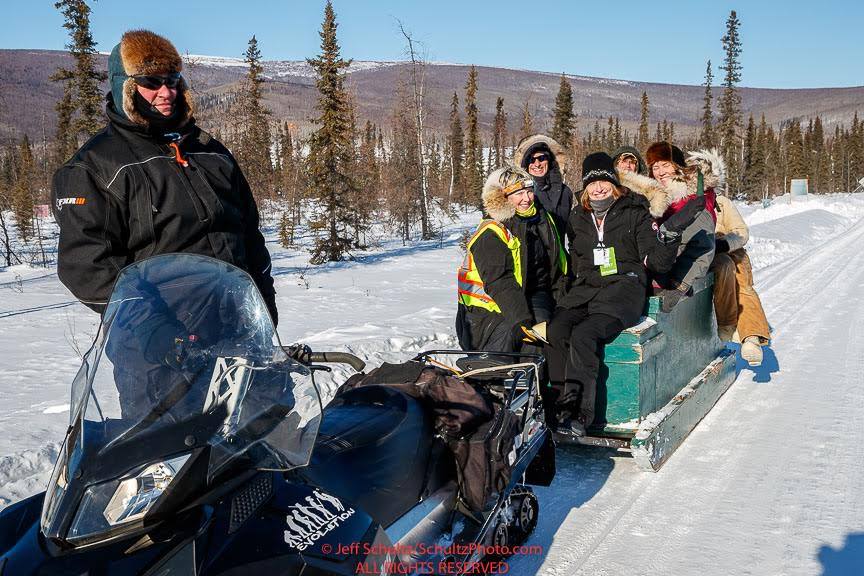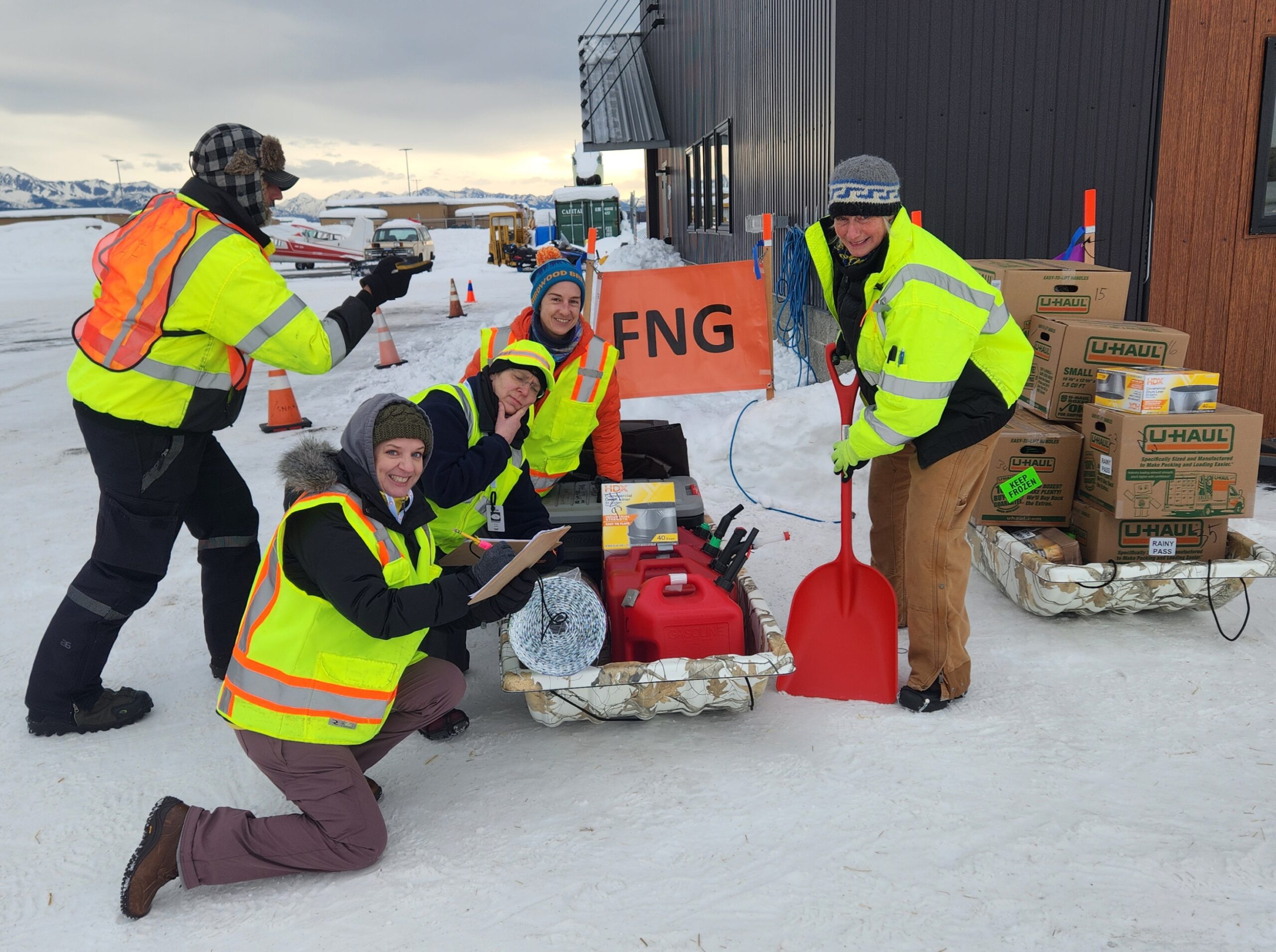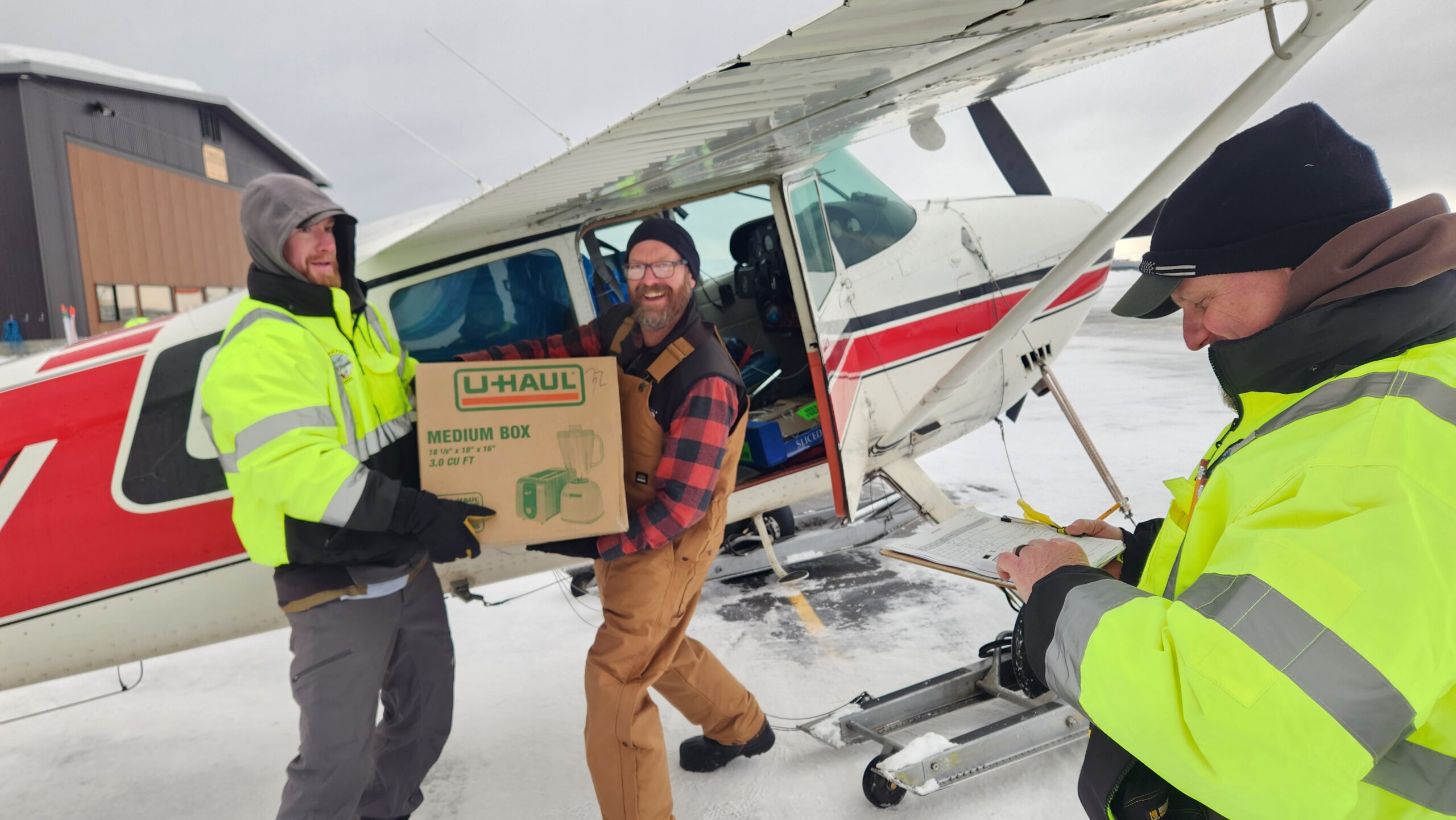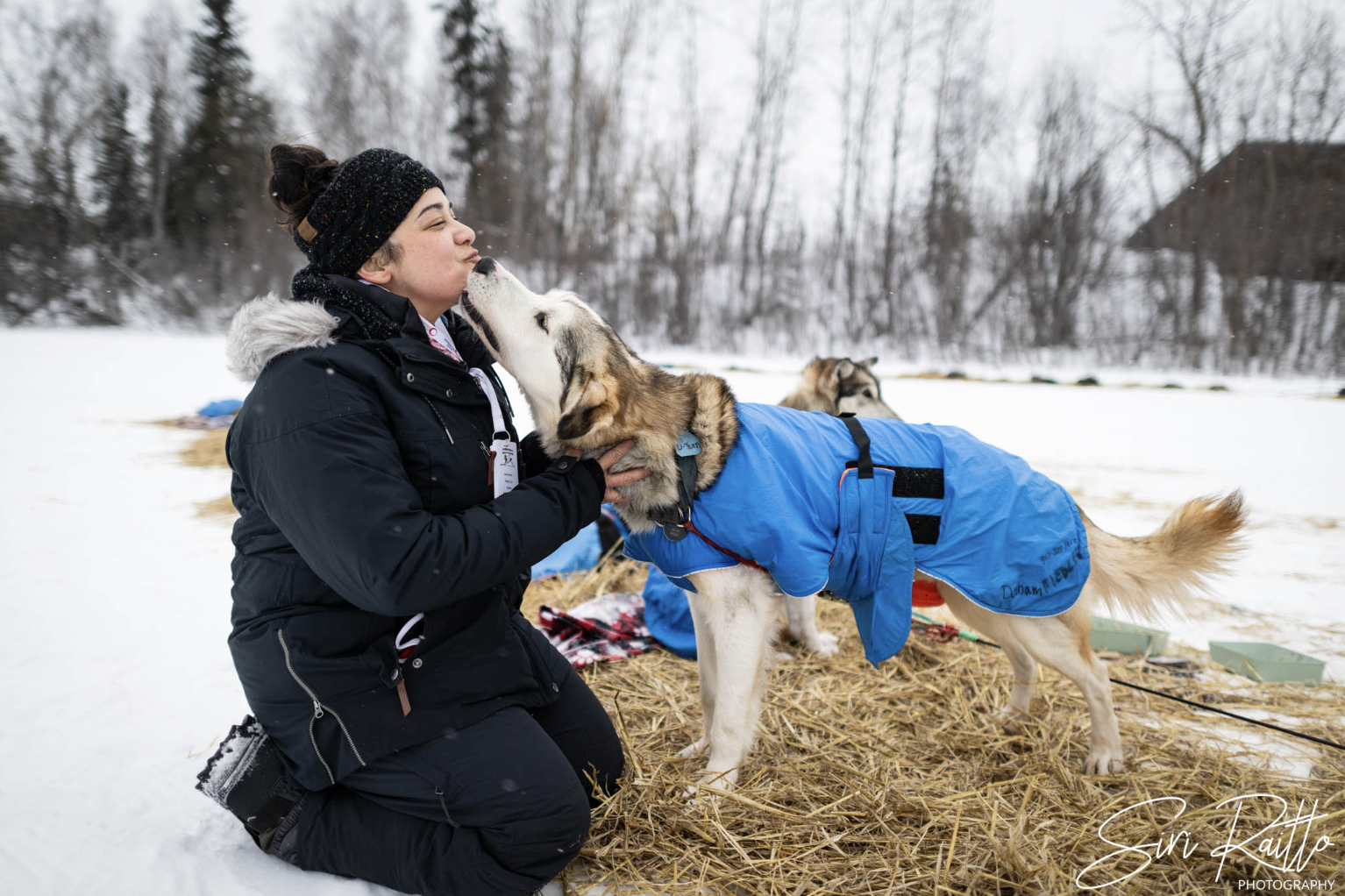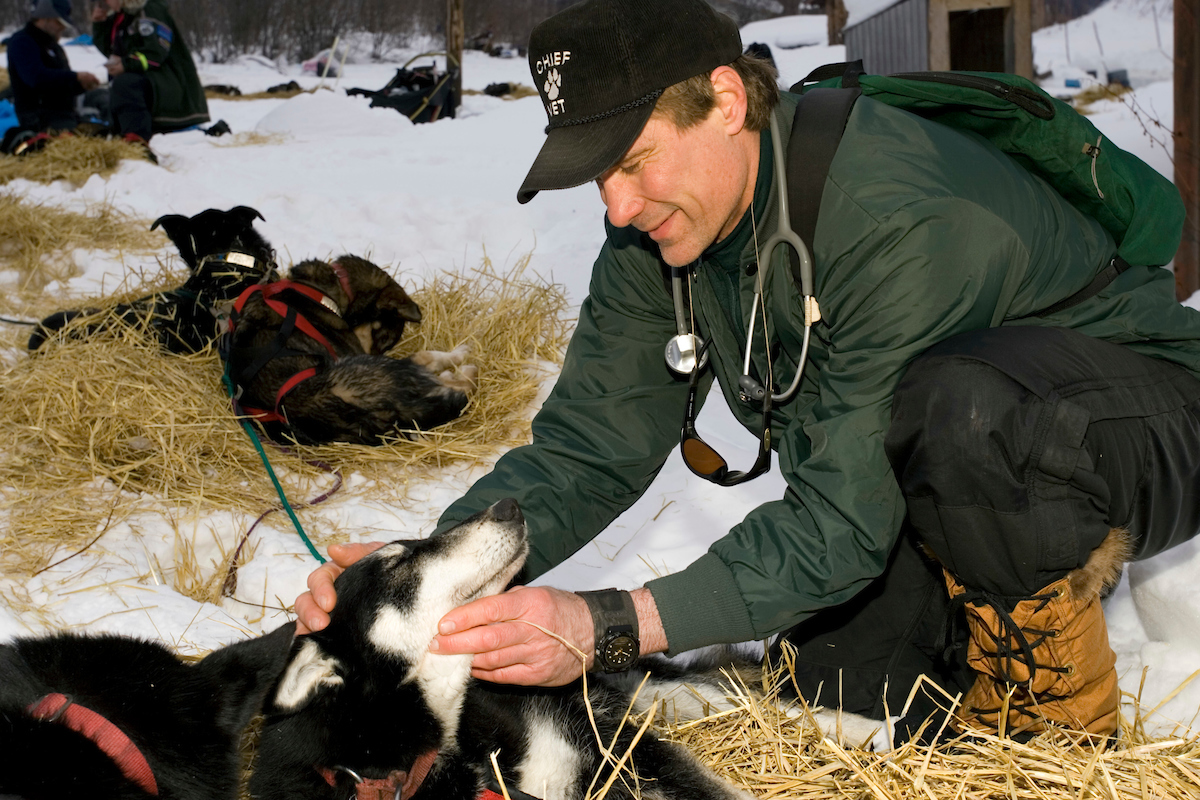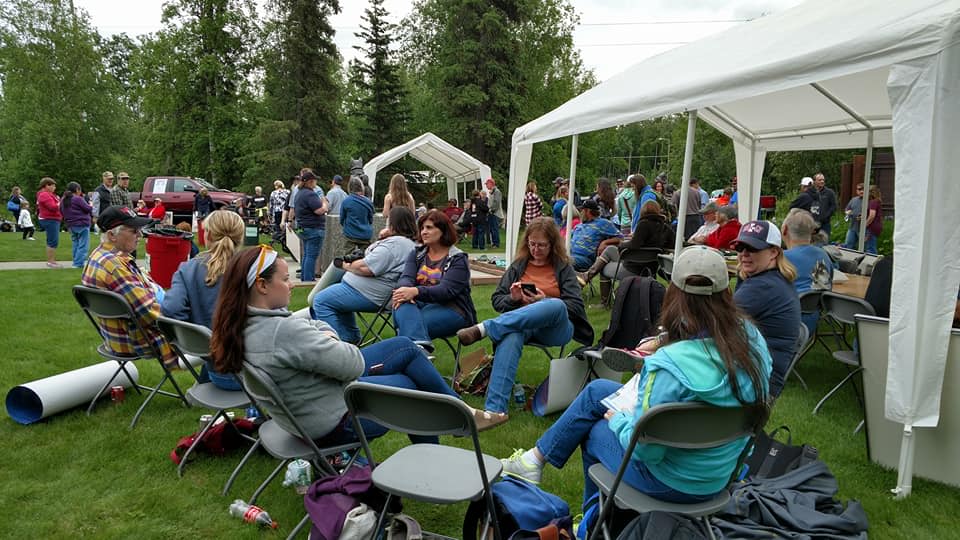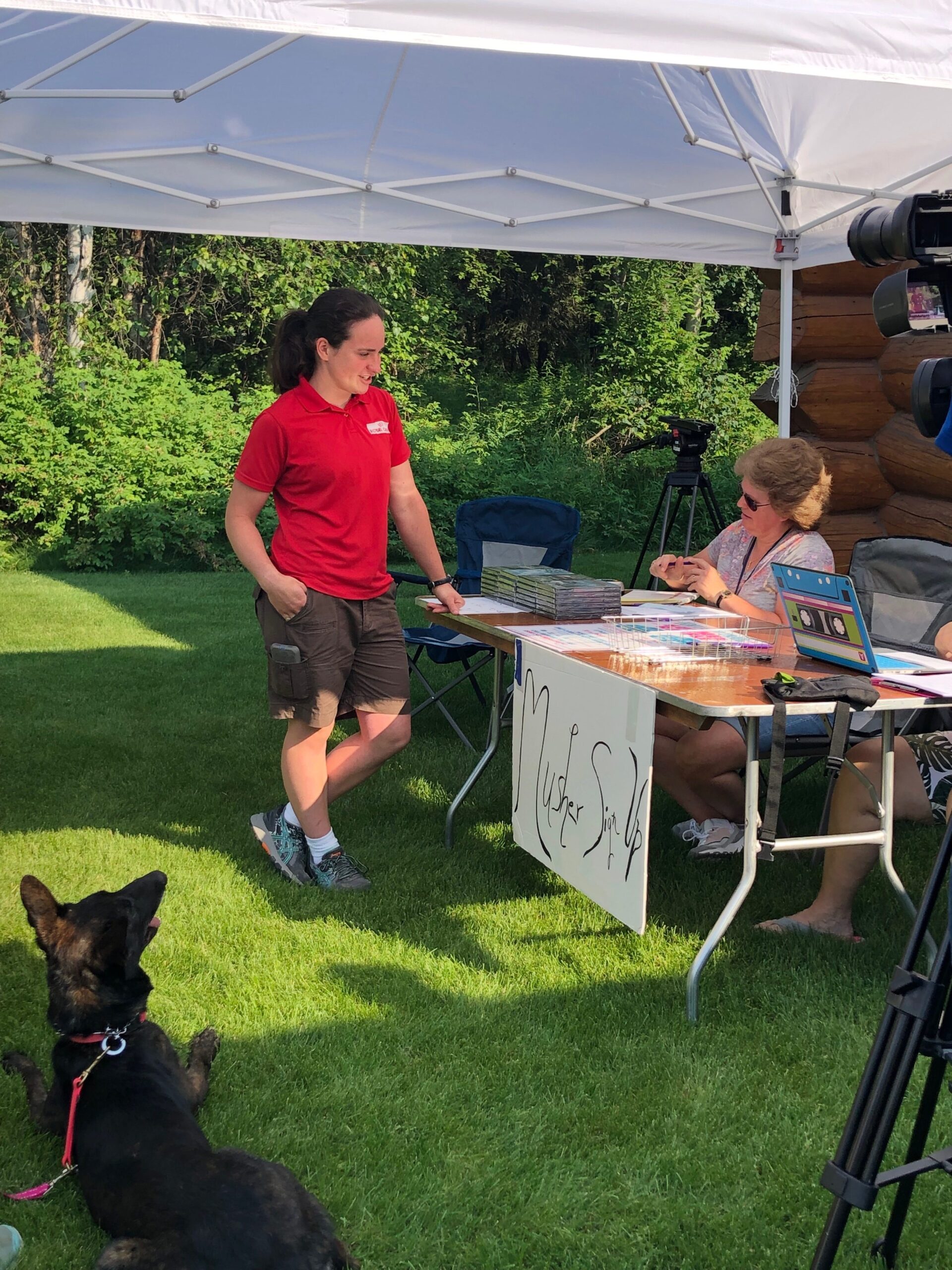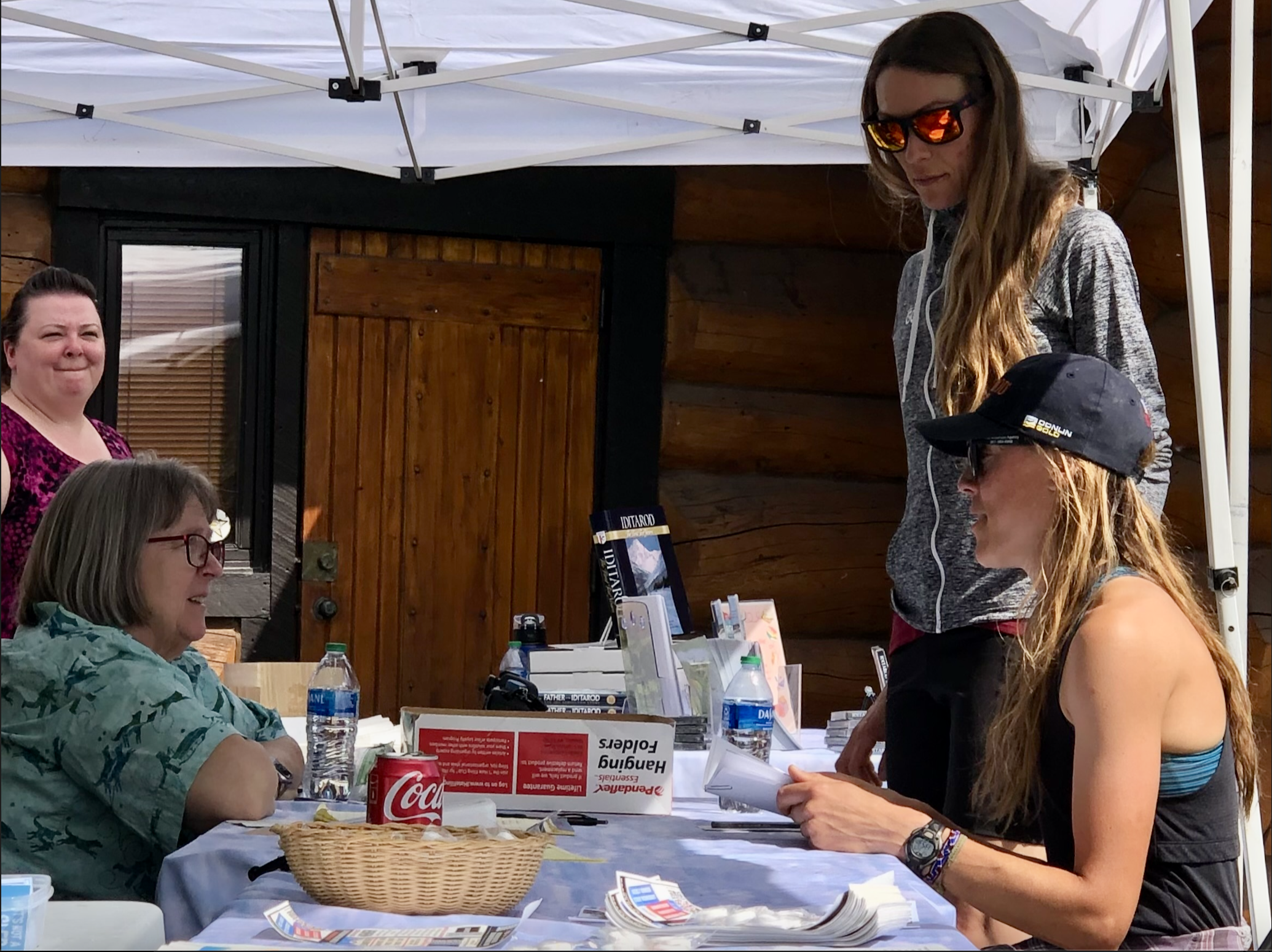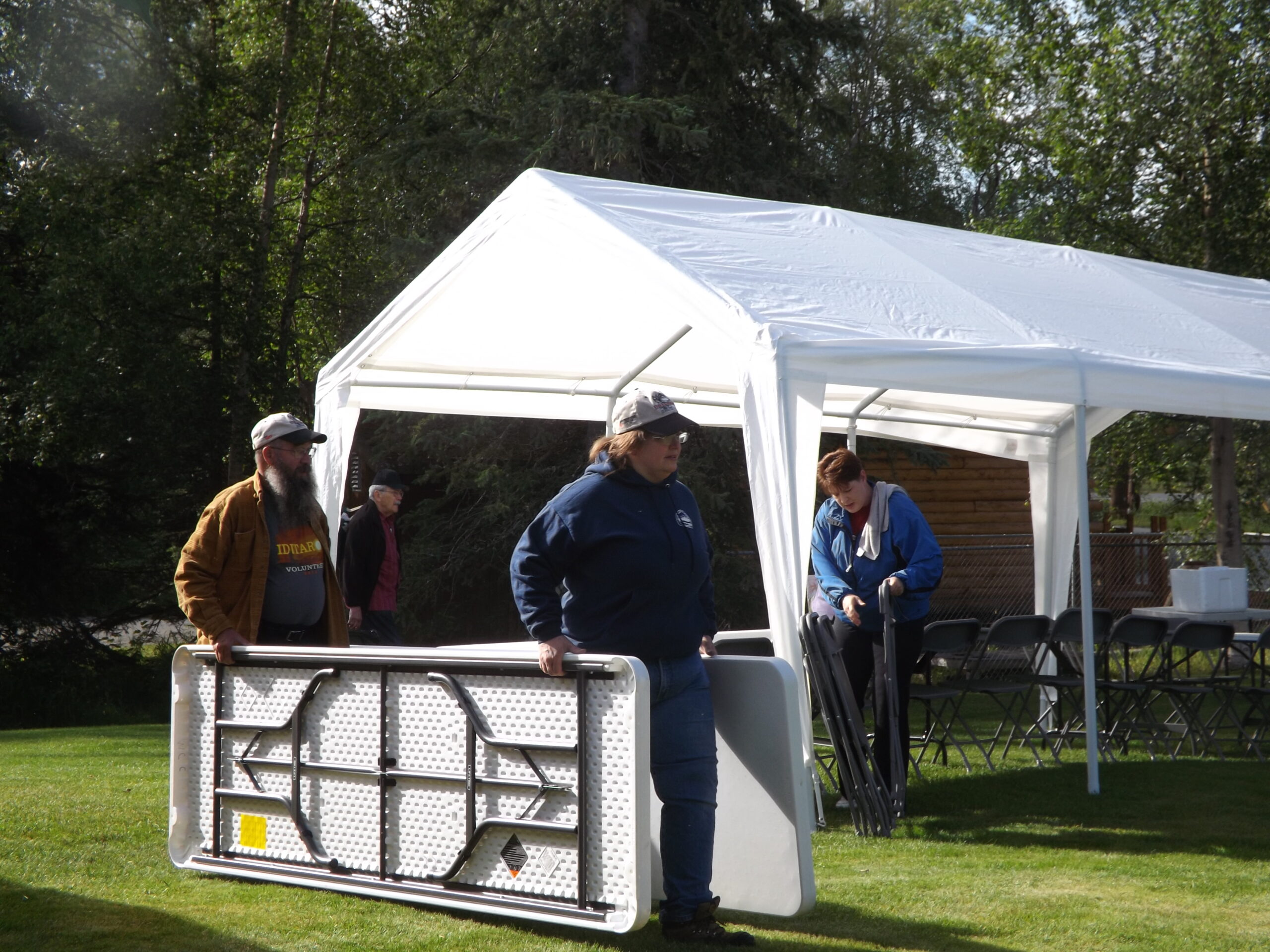
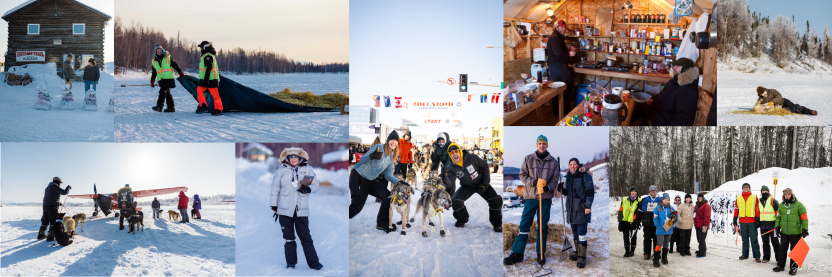
Thank you so much to our entire volunteer base; you are truly what helps keep this race alive and it couldn’t continue without the help of so many hands each year. Keep your eyes peeled here for 2027 volunteer information, and be sure to sign up for our newsletter to stay up-to-date.
2027 VOLUNTEER REGISTRATION
OPENS IN NOVEMBER.
General Information
The Iditarod is a thrilling event that spans a thousand miles, involves a thousand sled dogs, and relies on a thousand volunteers. Could you be one of those thousands?
Join us as we embark on a race across the Alaskan wilderness. The Iditarod consists of Pre-race Preparations, the Anchorage Ceremonial Start on the first Saturday in March followed by the Official Restart – the actual race day – the next day in Willow. The race culminates in Nome, marking the grand finale. There’s much to be done, so consider how you might be able to support the Last Great Race on Earth.
There is an assortment of opportunities which require volunteers from security to trail guards. While some tasks require prior experience or certifications, others are great opportunities for you to try a few jobs to see what you like best. Read on to find out more.
The following are brief position descriptions for jobs available for volunteers. We will start with the pre-race activities to get it all going. Below you will find available positions for the following areas:
If you would like to receive information about volunteering and general Iditarod happenings, please be sure to sign up for the newsletter.
For general volunteer questions, please email: itcregistration@iditarod.com
Pre-Race Preparations
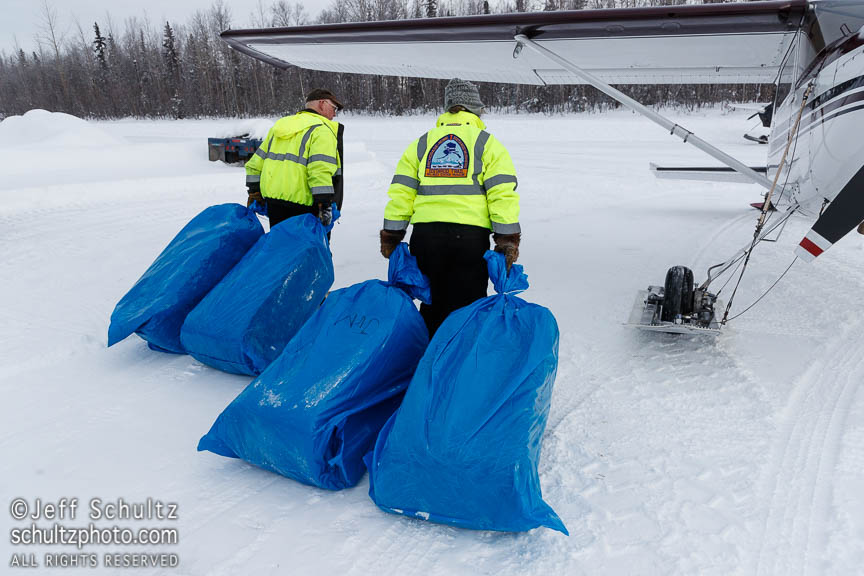
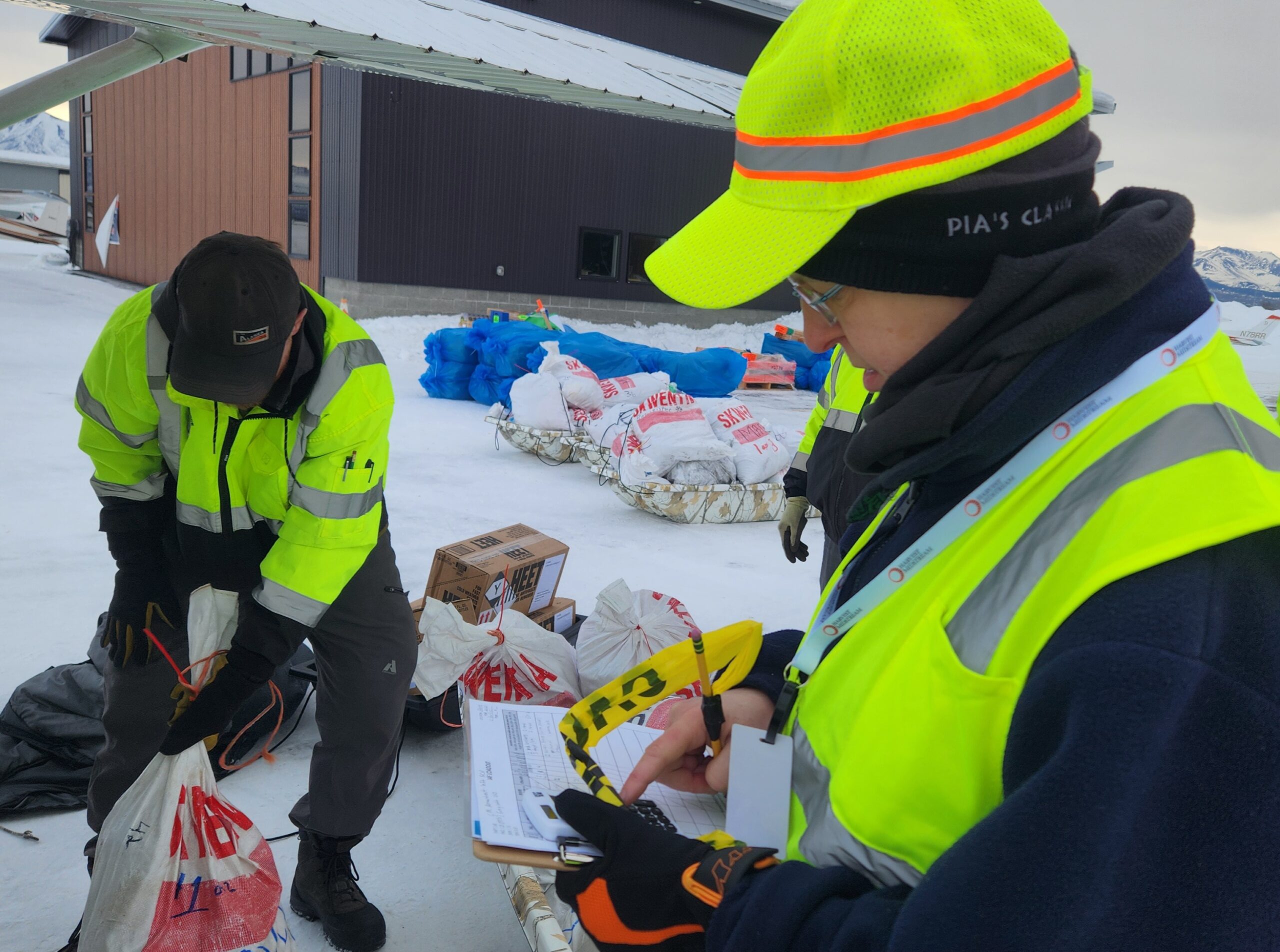
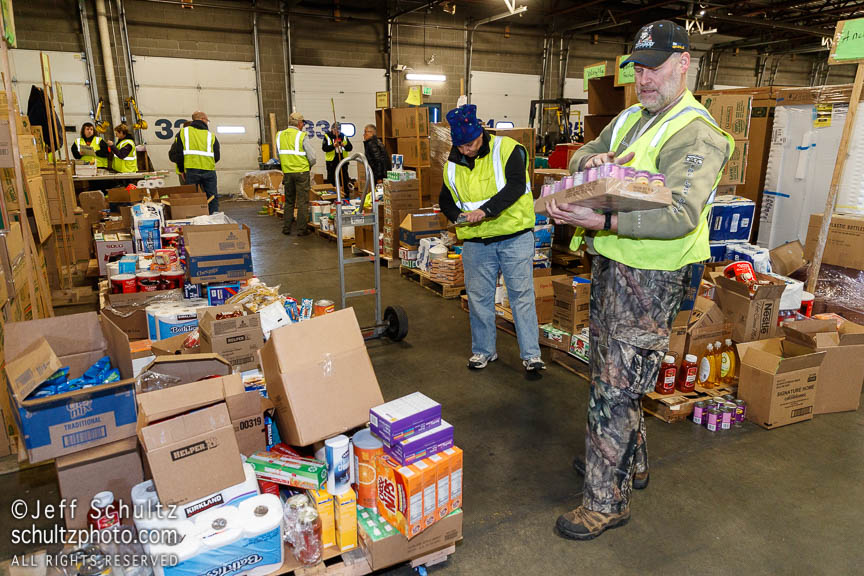
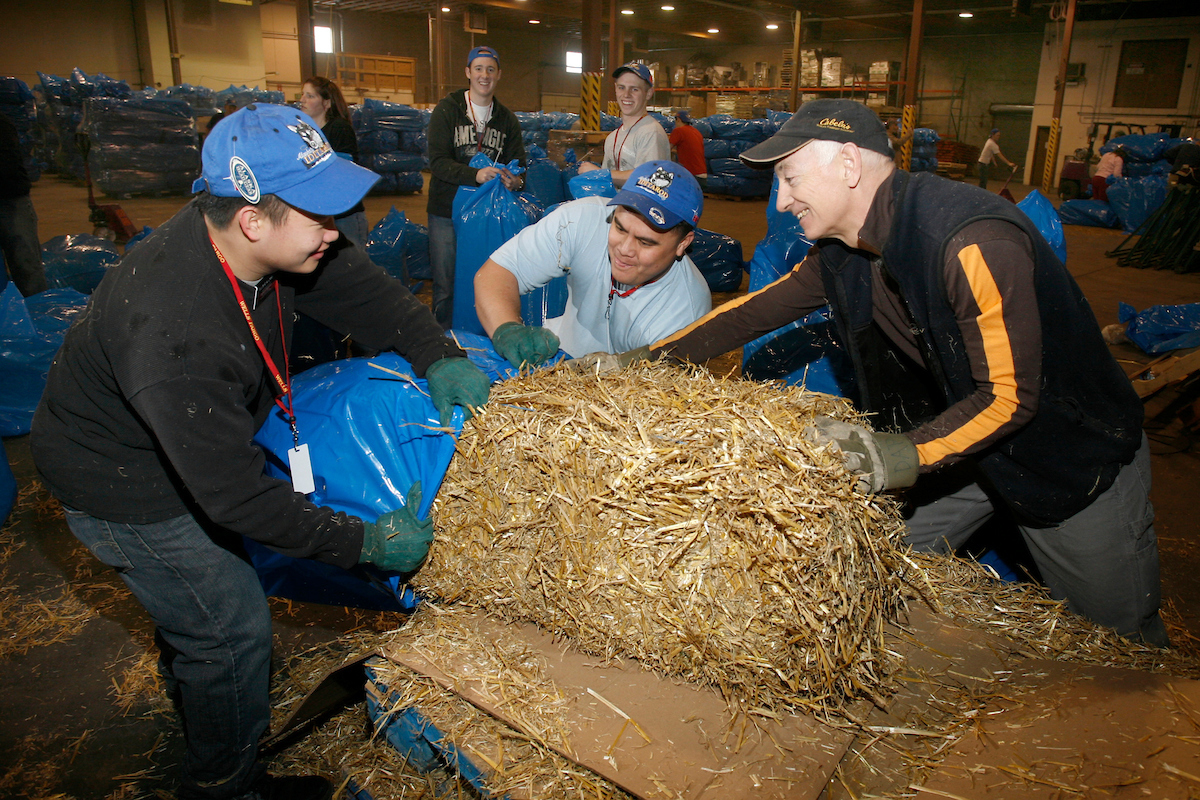
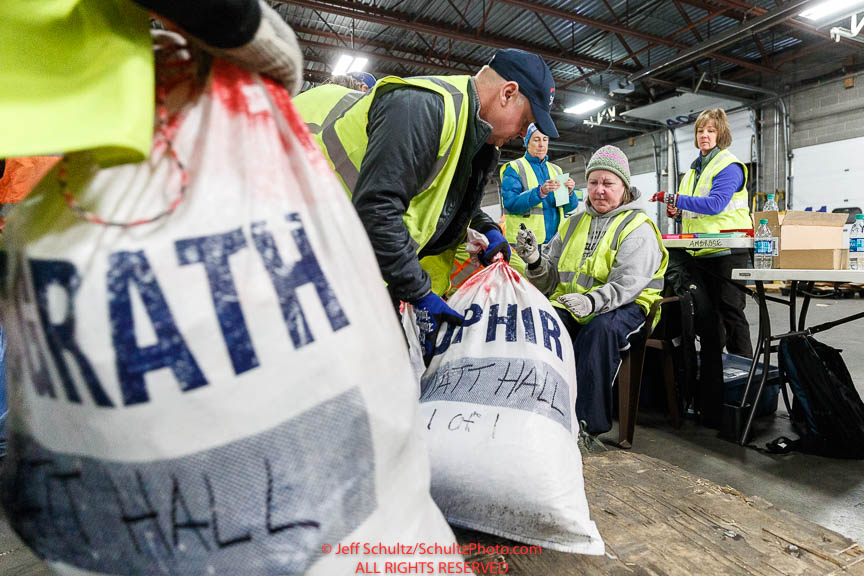
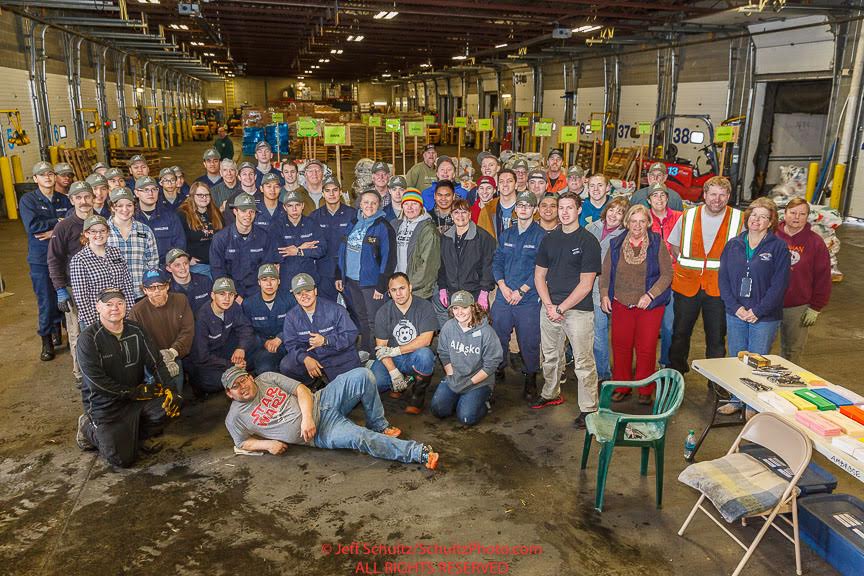
Pre-Race is where we help the teams prepare for their race by weighing, sorting, tagging, and loading the thousands of pounds of straw, musher bags, and food required at each checkpoint, to be shipped out. We work several days at the Airland Transport warehouse and need many hands!
Straw Drop – (February 12, 2026) Airland Transport, Anchorage – Bag & weigh straw bales for checkpoints.
Musher Bag Drop – (February 18 & 19, 2026) Airland Transport, Anchorage – Sort & weigh musher supply bags for each checkpoint. You need to be fit & be able to lift 50 pounds.
People Food Drop – (February 20, 2026) Airland Transport, Anchorage – Sort and box up volunteer food for the checkpoints.
Anchorage Headquarters Operations
Anchorage HQ offers a variety of jobs, including public-facing roles and those that support volunteers and teams on the trail. Depending on the dates and your availability, you may sign up for multiple positions.
Anchorage Headquarters Setup and Teardown – This may not sound like the most exciting activity, but it is the most vital. If we don’t have folks like you to help us set it up and take it down, then we are both missing out. Won’t you join us?
Anchorage Headquarters Set Up – Set up the designated rooms for ITC operations at various locations with operational equipment and supplies.
Anchorage Headquarters Tear Down – Take down and remove equipment and supplies from designated rooms at The Lakefront Anchorage and load it all back to storage after the race ends.
Anchorage Headquarters Driver/Expediter – Team members pick up equipment and supplies, run errands, and transport team members to and from the airports. Volunteers must have a valid driver’s license and are good drivers on the snowy streets of Anchorage.
Iditarod Air Force (IAF) Gate Agent – As a Gate Agent, you will serve as the front-facing representative for check-ins and questions for volunteers flying to checkpoints. You will oversee boarding, deplaning, and tracking passenger locations each evening. Gate Agents positions are available in Anchorage, McGrath, Unalakleet, and Nome. If you work at a checkpoint, you may also be able to work as a Gate Agent before or after your trail assignment.
Iditarod Trail Committee (ITC) Volunteer Services Center– ITC volunteer services center is located at The Wildbirch Hotel, located at 239 W 4th Avenue, Anchorage, Alaska, 99501 on the second floor This is one of the best places to be because you get to meet all the volunteers, hear all the trail stories, and offer a little of that Alaska hospitality. When they need to know what to do, and where to go, this is the place. Volunteer Services volunteers also play an important support role for several Iditarod operations in the Anchorage area.
Volunteers for this opportunity should be multi-faceted and able to work in a fast-paced environment. You will welcome other volunteers, help those needing assistance, answer questions, and provide information. Overall, one should expect to work a 4-hour shift and be comfortable using computer programs such as SmartSheets or Excel and other office equipment such as copy machines and phones. The Volunteer Services Center will open starting March 2, 2026 between the hours of 8:00 am-8:00 pm.
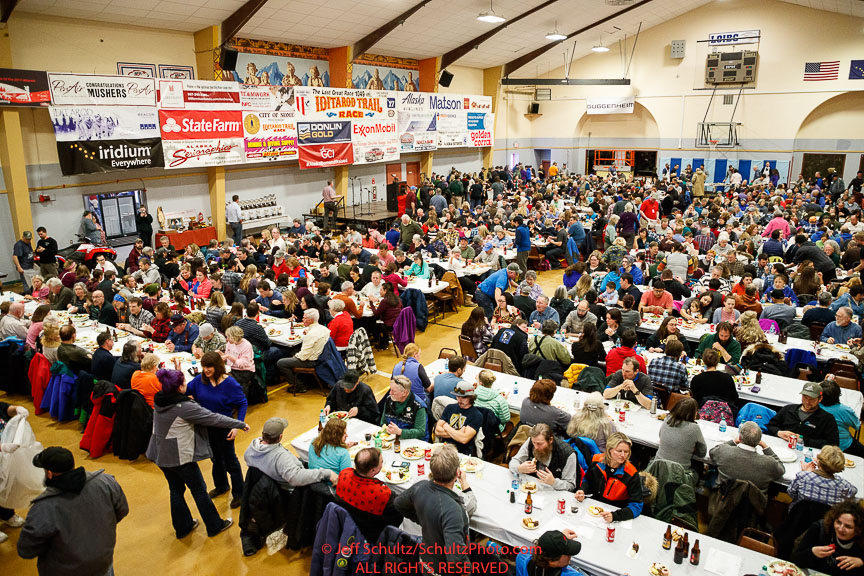
Musher Banquet – What would a grand event like this be without a banquet? This is your opportunity to work up close and side by side with some of the biggest and best names in mushing. There’s so much to do here: help with the Meet and Greet, set up the venue, greet everyone as they arrive, and escort people to their tables. And, of course, there is also the live auction! Who knows what else you could be doing. The best thing is there is no food service involved.
-
2026 Banquet will be held Thursday, March 5, 2026, at the Dena’ina Civic and Convention Center in downtown Anchorage
-
Volunteer hours are 12:00 pm to 10:00 pm the day of the banquet. Be prepared to stand for long periods of time.
- Dinner is provided.
Headquarters Call Center – The Call Center is located at The Wildbirch Hotel, located at 239 W 4th Avenue, Anchorage, Alaska, 99501. This team answers phone calls and emails from around the world and provides insight and updates about the race, the mushers, and other Iditarod-related topics. The Call Center opens Monday, March 2, 2026, from 8:00 am – 5:00 pm. Hours are extended beginning Race Day from 6:00 am – 10:00 pm and continues until the Red Lantern musher arrives in Nome.
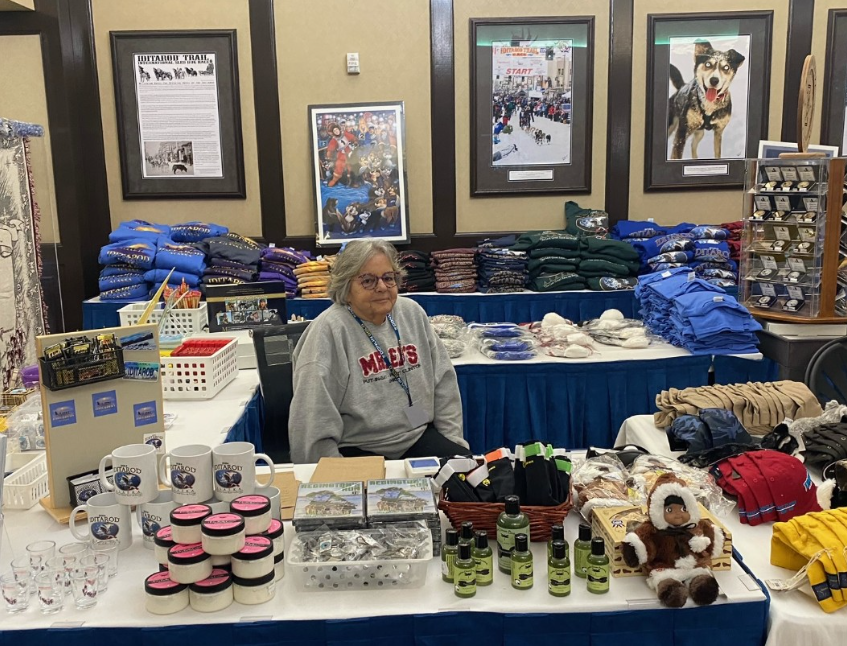
ITC Sales & Merchandise – Like every great event, volunteers and spectators alike want to take home a souvenir or two. Volunteers sell Iditarod merchandise during the race at The Wildbirch Hotel, located at 239 W 4th Avenue Anchorage, Alaska, 99501, during the Mushers Banquet held at the Dena’ina Civic and Convention Center, in the snow at the Start & Restart of the Race, and in Nome. Sales begin the weekend before the race until Banquet Day in Nome. While working at one of our many gift shops, you will help fans making purchases of awesome memorabilia, answer questions, restock inventory, refresh displays, and more. The ability to use cash registers and a credit card machine is helpful.
Press & Media Conference Support – (March 4, 2026) Volunteers working this venue will set up for media events, distribute media packets, and provide race information to the media as they arrive for their meeting.
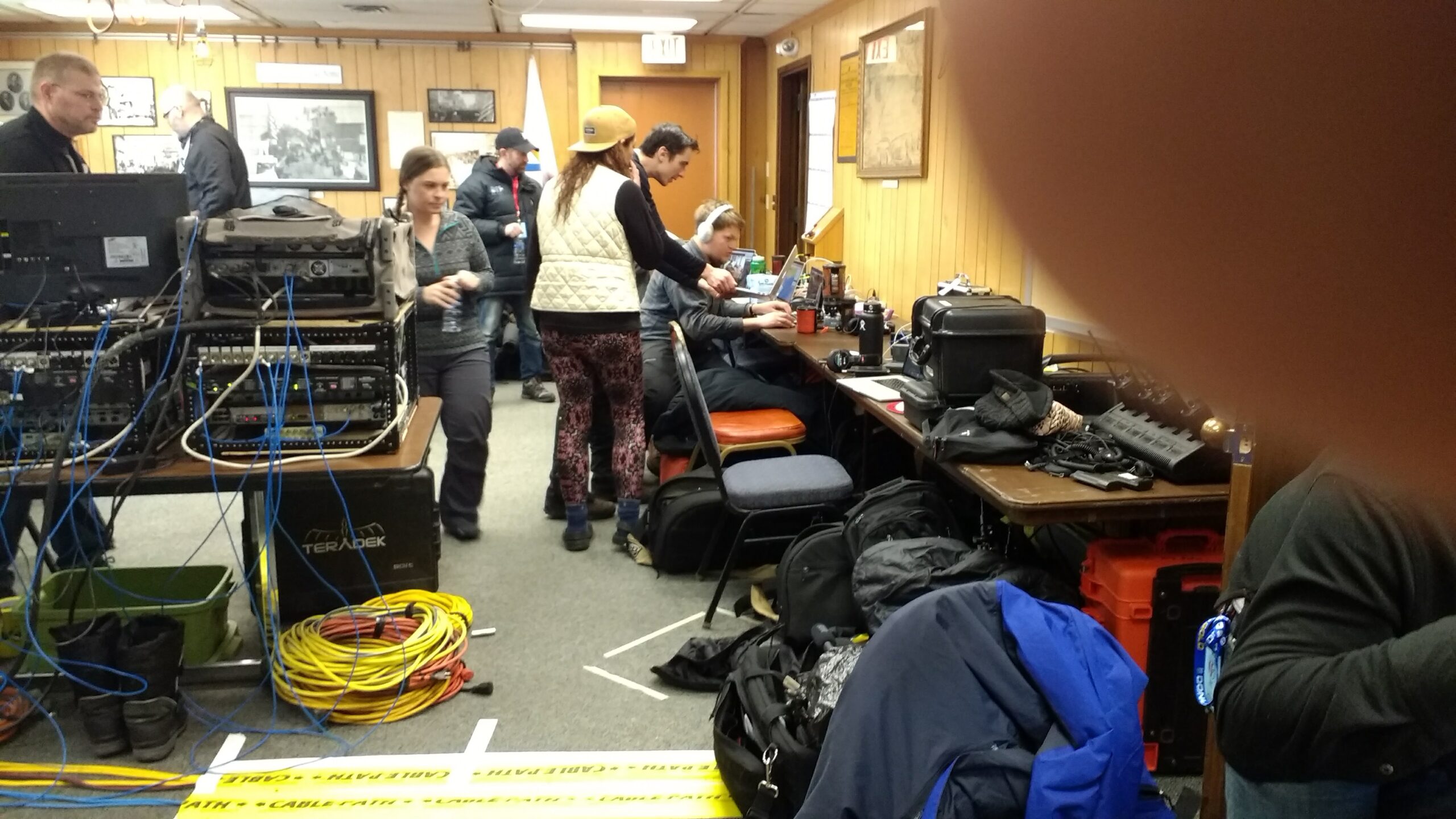
Anchorage Network Center (ANC) Comms – ANC runs 6-hour shifts from Restart until the Red Lantern musher arrives in Nome. Volunteers in this area monitor communication to and from all the checkpoints and relay information as required. This job is mostly computer-based and requires data entry. ANC talks to checkpoint crews and logistics personnel to collect or verify race information. They enter and publish race times and other details onto the official standings on the website. Discretion imperative.
There is a mandatory training session for ANC Comms volunteers before the race to familiarize themselves with the software and requirements of the job.
Ideal Comms volunteers have basic computer skills with an emphasis on Google Suite or Microsoft Office programs. They communicate well via telephone or satellite phone. All are detail-oriented and can react quickly to changing needs as they arise, from routine data entry to minor emergencies on the trail. Optimal ANC volunteers are competent data entry workers, teachers, or other computer-based professionals.
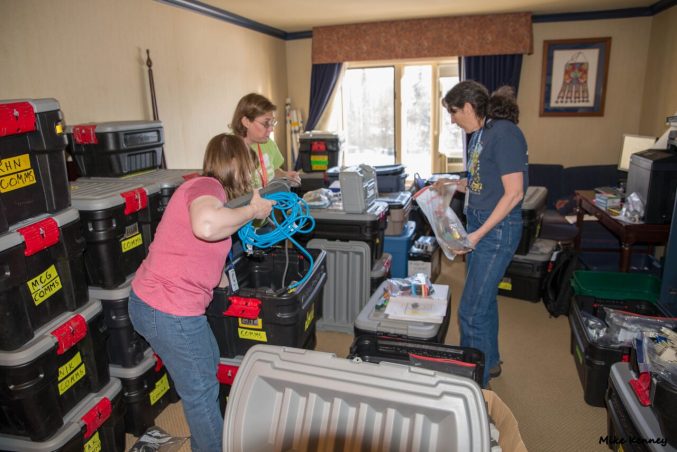
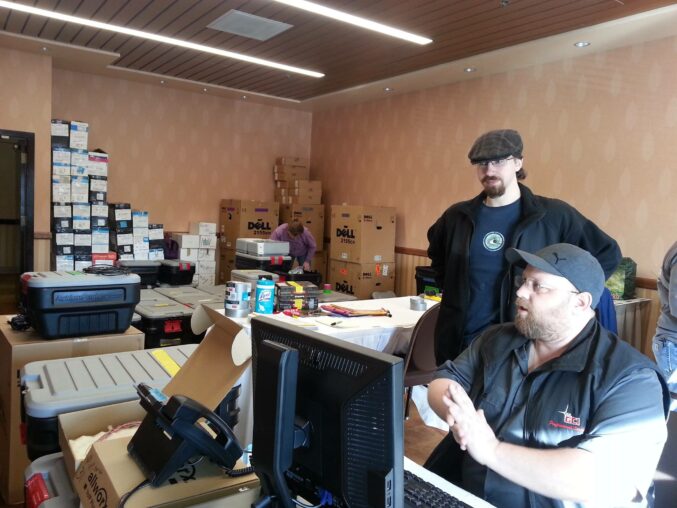
ITC Tech Team and Virtual Help Center – Volunteers on the ITC Tech Team will prepare, install, and monitor hotel race computers, printers, and internet connectivity. They will charge, setup, test, and assign trail computers, mobile devices, and sat phones before the race begins and function as on-call help throughout the race for both hotel & trail teams. Volunteers will work in person or over the phone. You should have experience with telecom and computer setup and can assist other volunteers with varying degrees of tech experience.

Ceremonial Start Operations (Anchorage, AK)
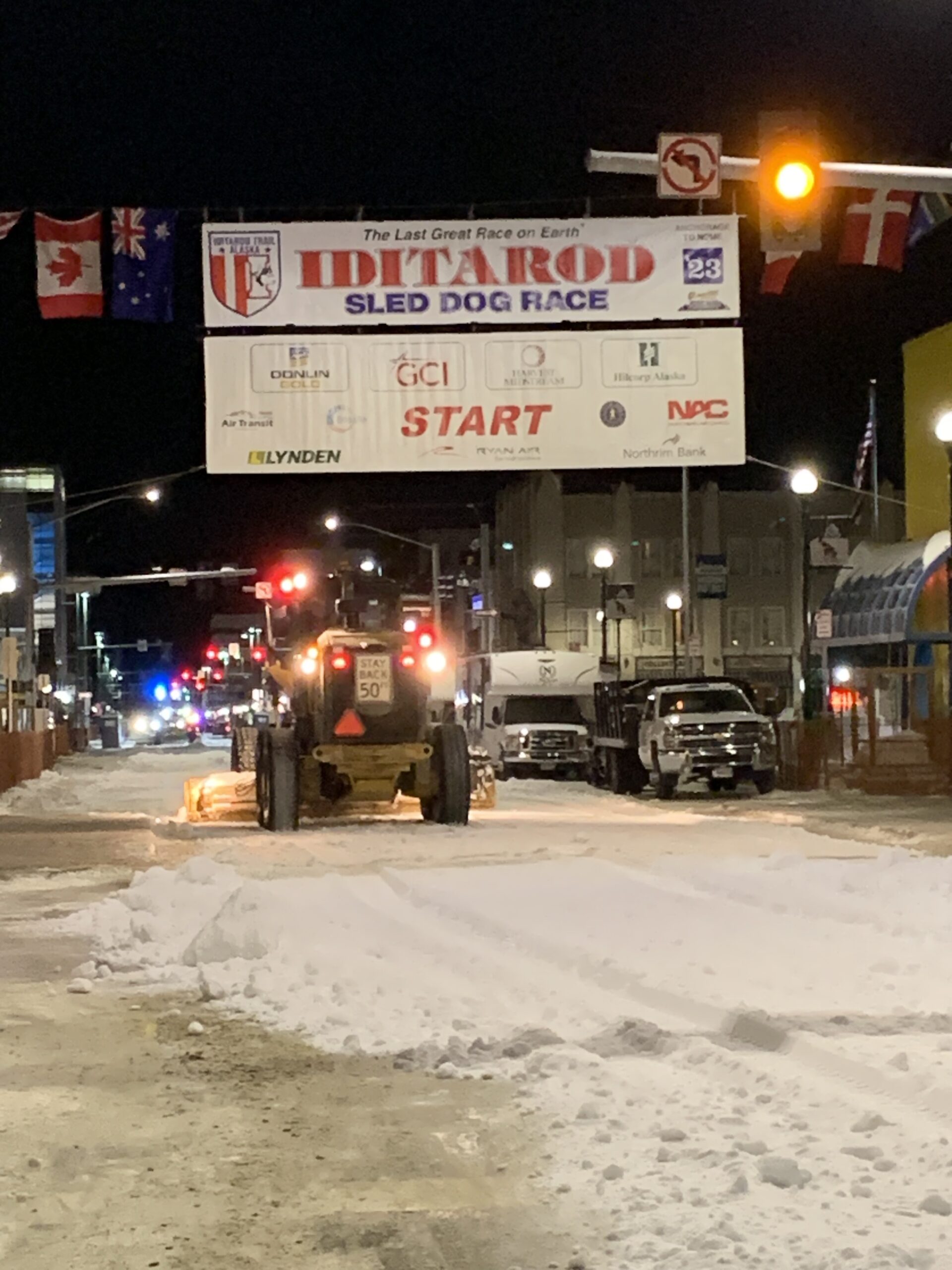
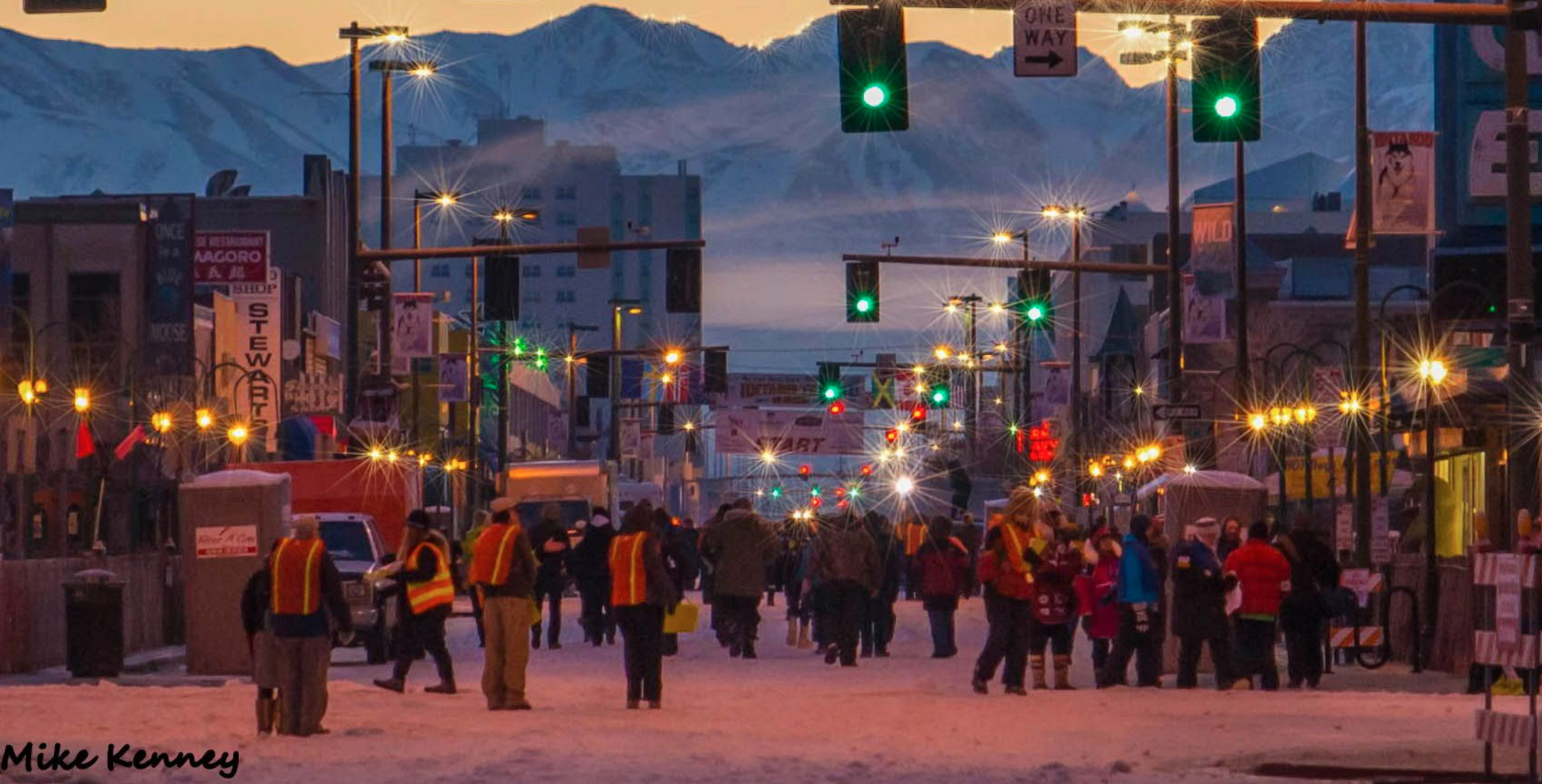
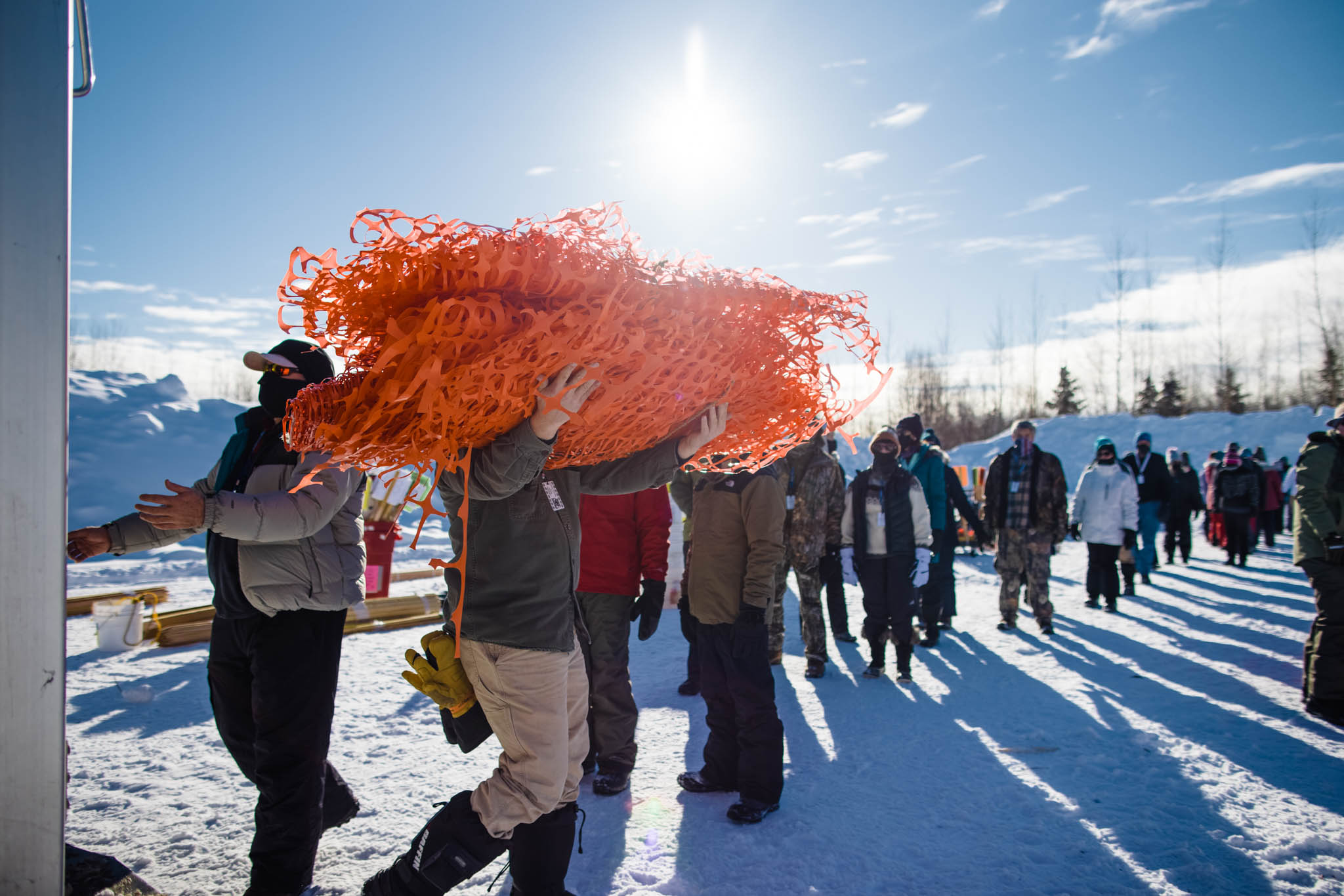
It takes many hands to set up downtown Anchorage for the Ceremonial Start. Could you be just the person to make a difference? The Friday before the race teams of volunteers set up barricades, put up fencing for musher parking, and more. Can you believe they dump snow on the road so that all the teams can get to the start line?
There are countless opportunities available for you to join us at the Ceremonial Start in downtown Anchorage. Hundreds of volunteers are needed for the Anchorage Ceremonial Start to enable the competing mushers as they make their way through downtown Anchorage to finish 11 miles later at the Bureau of Land Management facility (BLM). Personal Transportation Is Highly Recommended.
Below are the activities requiring volunteers on Saturday March 7, 2026. These positions require you to be outside for extended periods of time. PLEASE – Dress for the Weather!
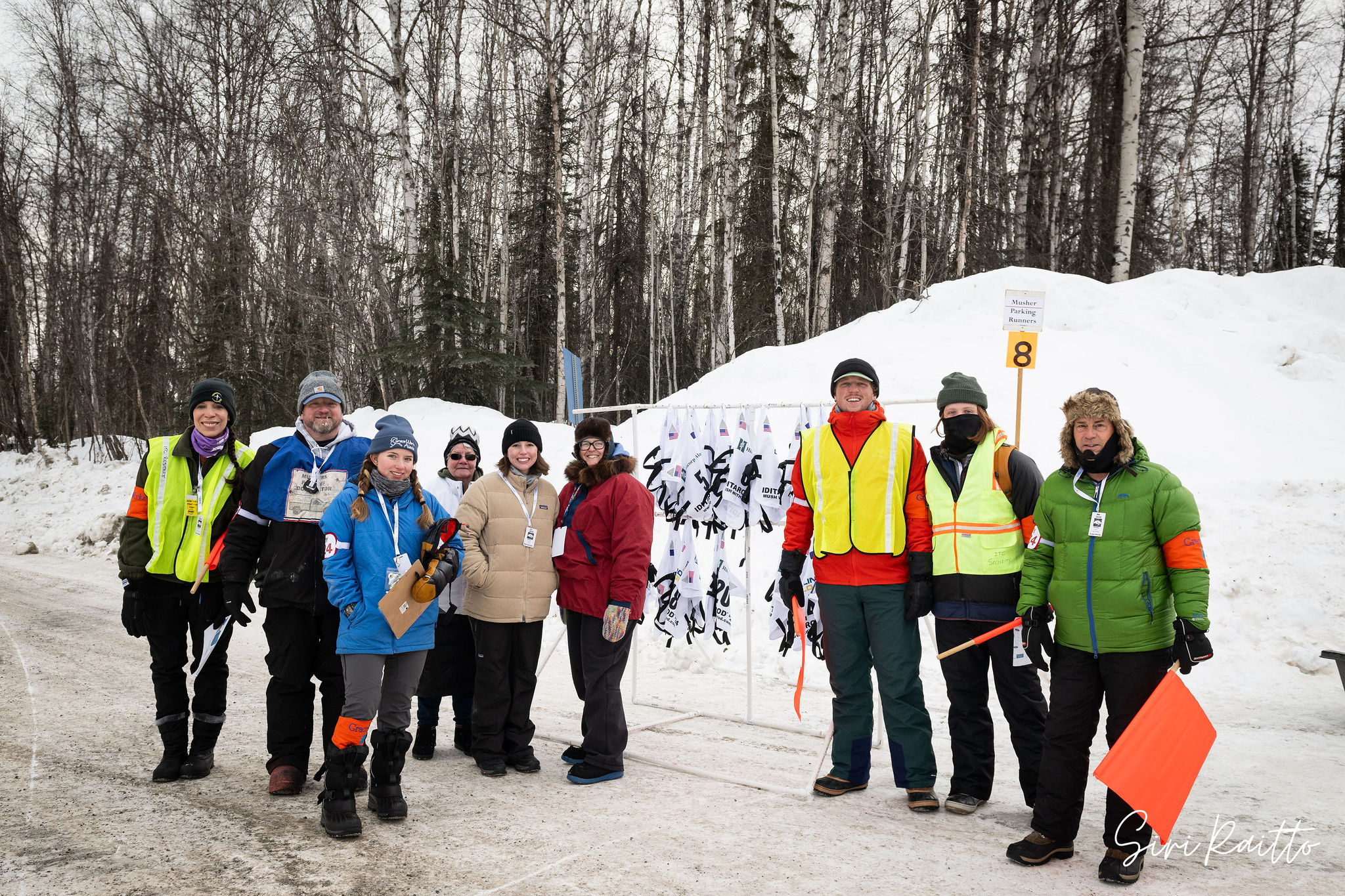
Musher Parking – 5:00 a.m. to 9:00 a.m. Volunteers assist with Musher Check-in, locate their staging/parking place, install sponsor banners, and other duties as assigned.
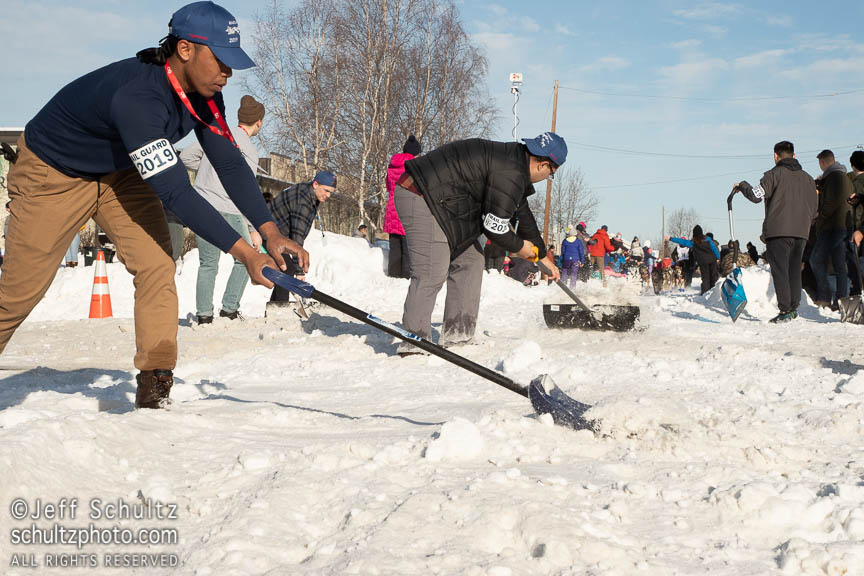
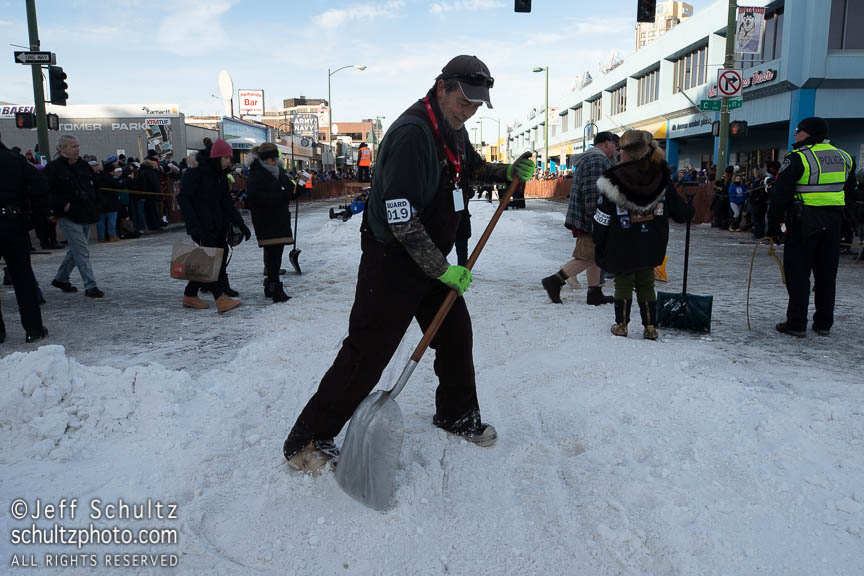
Trail Guard – 9:00 am until the last musher passes your location. These positions are available along the 11- mile trail from 4th Ave and C Street to BLM Headquarters. Duties include keeping the trail clear of pedestrians and pets and adding snow back to the roadway/trail at crossings.
Security – 7:00 am until the event is complete. Security volunteers play an integral role in ensuring the safety of all attendees, human and canine alike, and for securing the event areas. These positions require a skillful flair for dealing with the public and experience in diplomacy to keep the general public from interfering with race participants. You will staff public crossings and keep the trail open within the staging area.
VIP/IditaRider Liaisons – 7:00 am until the event is complete. These positions require public relation skills as you may be assisting IditaRiders and their family members with locating their assigned mushers or serving as an escort for Public Officials and Honored Guests.
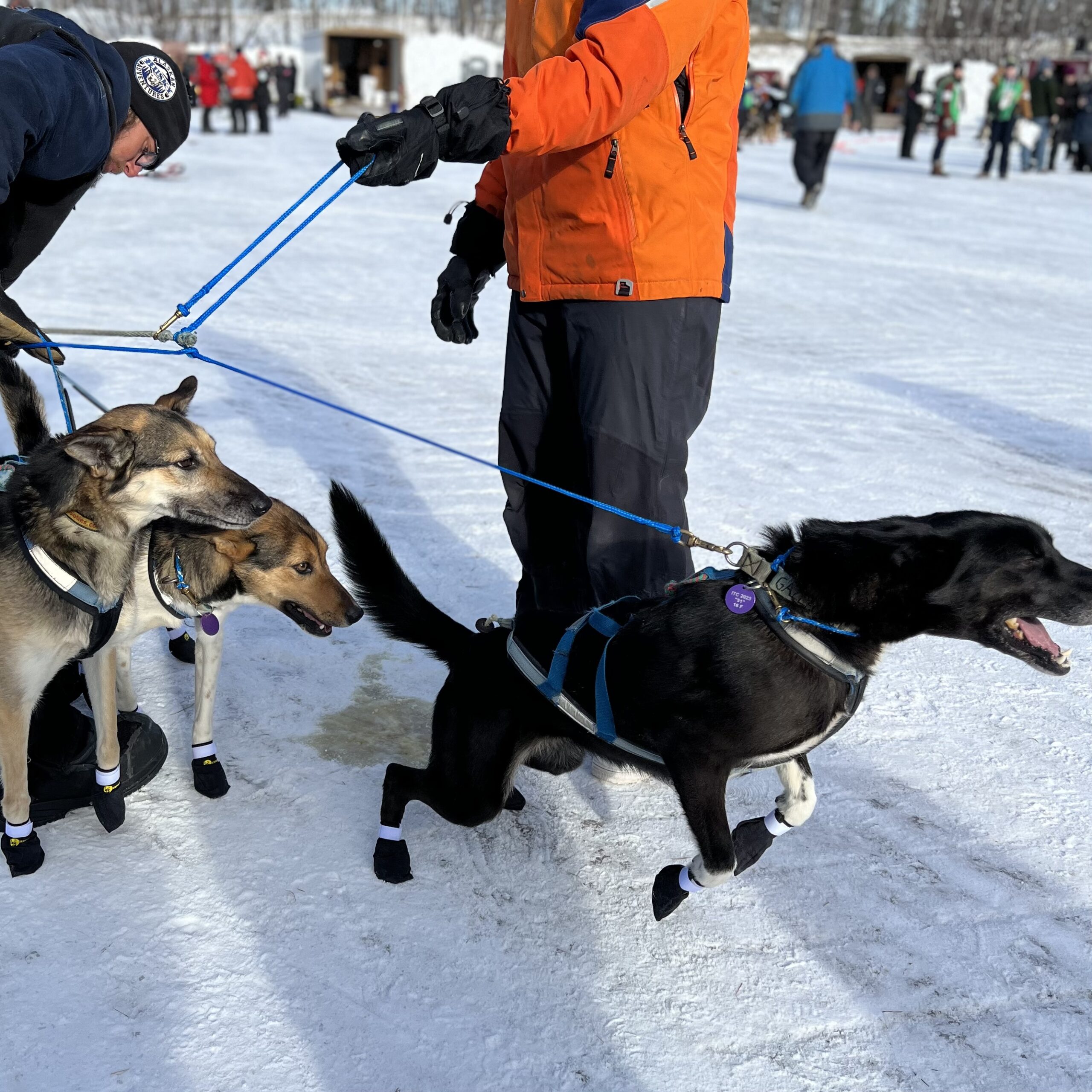
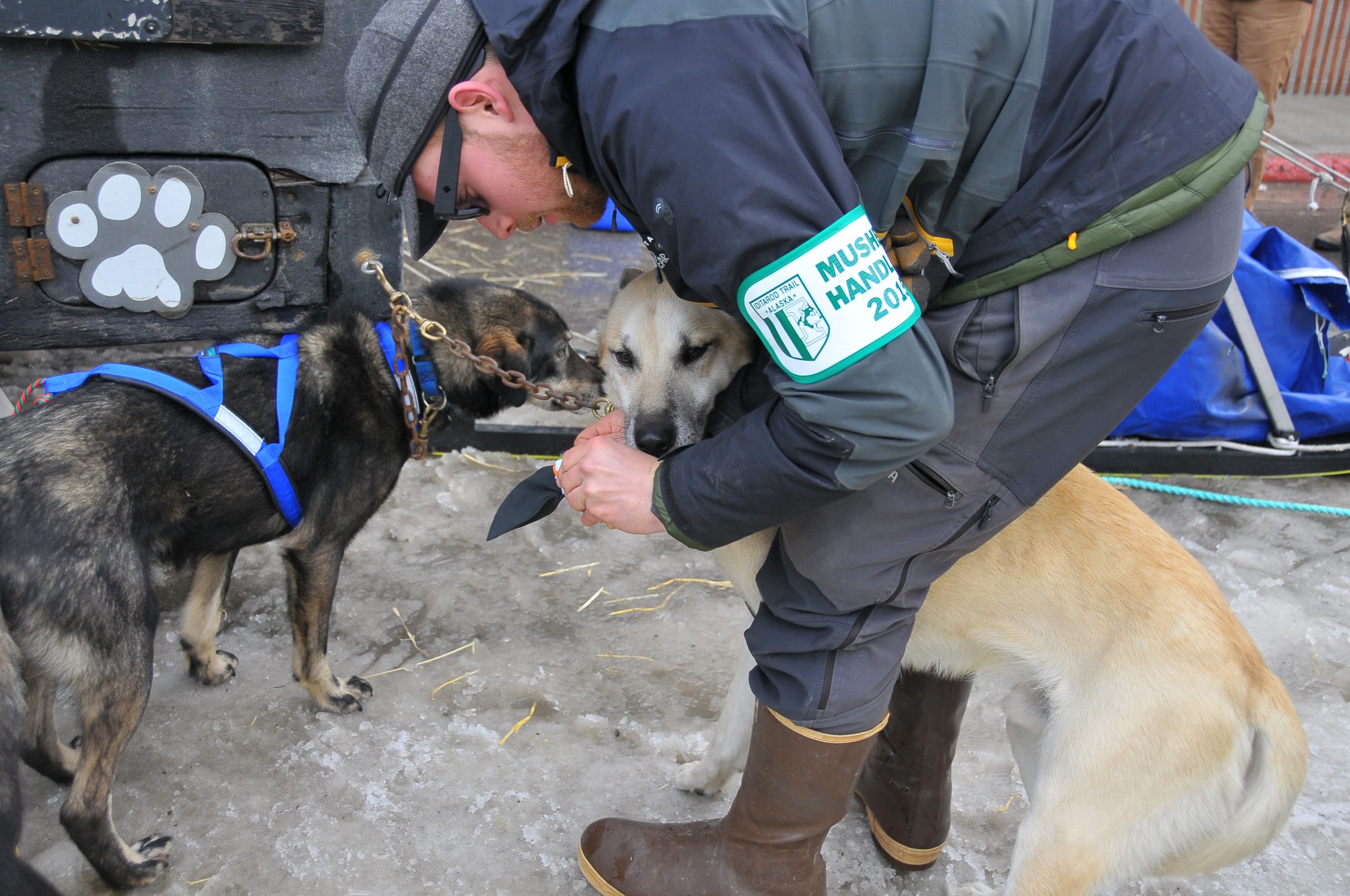
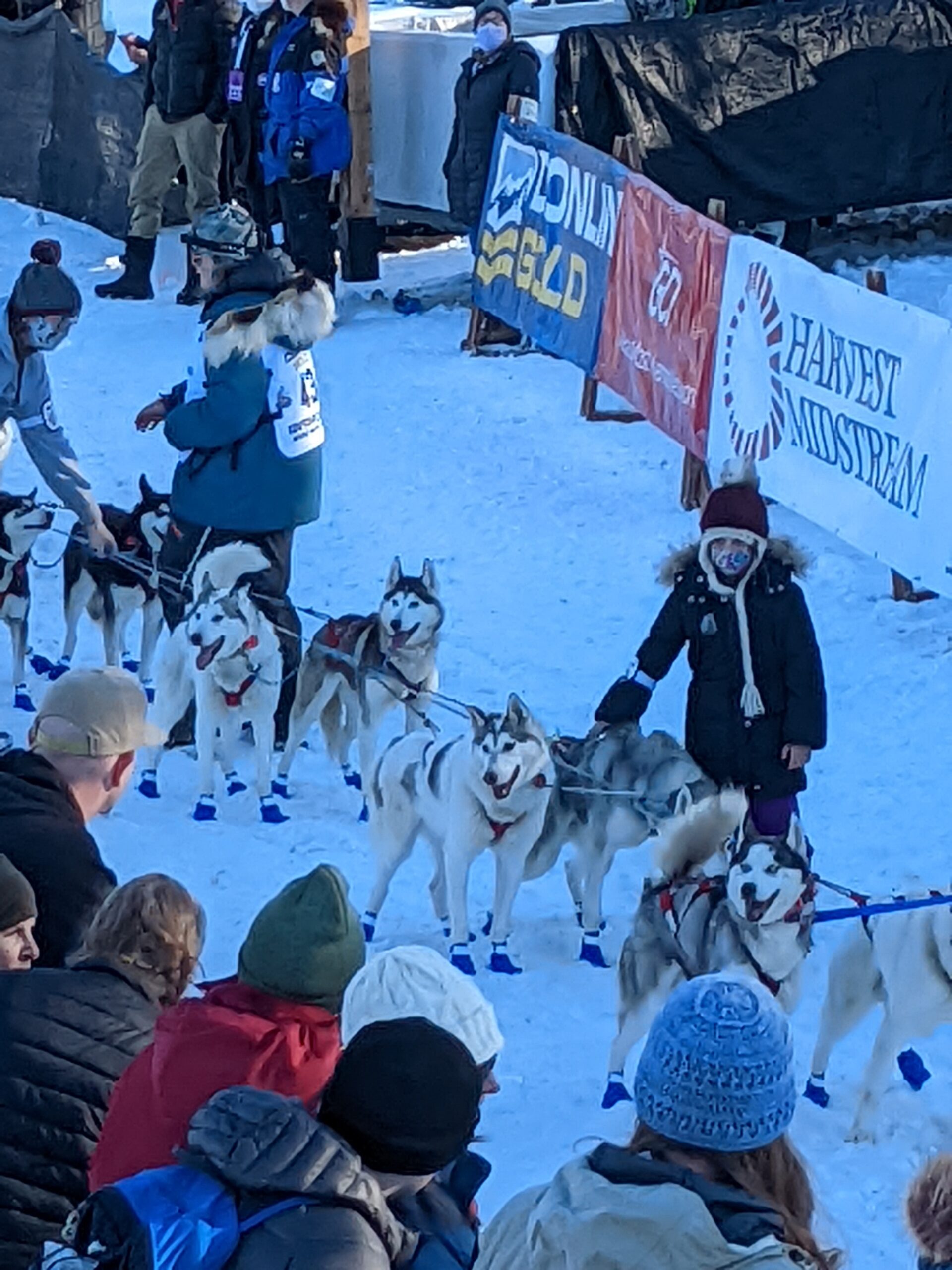
Dog Handlers – At 7:00 am. all volunteer dog handlers meet the Lead Dog Handler for their initial assignment at 4th and F, then return for additional assignments until the event is complete. Volunteers help mushers move their team from their parking space to the Start Line on 4th Ave. You must be physically fit and able to work in arctic conditions to keep pace with an energetic and excited dog team. Be prepared to run at least 4 city blocks in snow. This job is not easy. It’s not a job for everyone.
These volunteers require special training, and you will take one Dog Handler Training class to be held at Iditarod Headquarters in Wasilla on February 21st at 10:00 am or at the Lakefront Anchorage, 4800 Spenard Road Anchorage Friday, March 6th at 10:00 am or 12:00 pm.
End of Ceremonial Start/Bureau of Land Management (BLM) – The Anchorage Ceremonial Start is finished when teams and their IditaRiders have completed the 11-mile run from the Start Line to the Bureau of Land Management parking lot. Volunteer positions in this area start at 9:00 am and end when all teams have checked in. Shuttle bus schedules may not be compatible with shift times and personal transportation is highly recommended.
ITC Sales & Merchandise – Like every great event, volunteers and spectators alike want to take home a souvenir or two. Volunteers sell Iditarod merchandise during the race at The Lakefront Anchorage, 4800 Spenard Road, during the Mushers Banquet held at the Dena’ina Civic and Convention Center, in the snow at the Start & Restart of the Race, and in Nome. Sales begin the weekend before the race until Banquet Day in Nome. While working at one of our many gift shops, you will help fans making purchases of awesome memorabilia, answer questions, restock inventory, refresh displays, and more. The ability to use cash registers and a credit card machine is helpful.
Official Restart Operations (Willow, AK)
Teams assemble and anticipation builds with the official announcer’s countdown. Tourists and race fans line the chute and watch as each team takes off westward. The setup on Willow’s frozen lake for the Official Restart requires a collective effort from over 75 volunteers. If you are available, consider helping and cheering on your favorite team.
The actual start of the race begins in the community of Willow, on the first Sunday in March at the Community Center. This is a fantastic opportunity for any avid race fan to be up close to all the action of this great race and take part in making it a success.
As with the Anchorage Ceremonial Start there is lots to do before, during, and after this part of the race. If you’re interested in joining us, it is another awesome opportunity to be a part of this great team.
Load Truck – March 7, 2026 – At the storage facility in Wasilla, a team of volunteers will load all equipment, transport it to Willow, and unload it prior to set up.
Set Up for Race Start in Willow – After the Anchorage Ceremonial Start is finished on Saturday, volunteers ready the Community Center in Willow for the Official Restart. The Restart in Willow is the actual start of the race down the trail. Setup takes long hours, in cold temperatures, with lots of snow. Proper clothing and equipment are a must. It is important to note that the activity level of some jobs requires a volunteer to be in good physical condition. After the race has ended the equipment is then reloaded onto the truck on Sunday evening after the event and transported back to Wasilla, where it will be unloaded and returned to storage Monday morning.
- Positions in this area are always available
Early Morning Setup/Musher Parking – On Sunday, race day, volunteers provide early morning security and help mushers find their staging/parking place. Volunteers are also needed to assemble fencing to secure staging and chute areas as well as set up other equipment needed at the event.
- Positions in this area are always available
ITC Registration at the Restart – Volunteers in this area should be multi-faceted, and able to work in a fast-paced environment as they register volunteers, help people needing assistance, answer questions, and provide information. Overall, one should expect to work a 4-hour shift between the hours of 6:00 am to 2:00 pm and be comfortable using databases to sign in volunteers.
ITC Sales and Merchandise at the Restart – Like every great event, volunteers and spectators alike want to take home a souvenir or two. Volunteers sell Iditarod merchandise during the race at The Wildbirch Hotel, located at 239 W 4th Avenue Anchorage Alaska 99501, during the Mushers Banquet held at the Dena’ina Civic and Convention Center, in the snow at the Start & Restart of the Race, and in Nome. Sales begin the weekend before the race until Banquet Day in Nome. While working at one of our many gift shops, you will help fans making purchases of awesome memorabilia, answer questions, restock inventory, refresh displays, and more. The ability to use cash registers and a credit card machine is helpful.
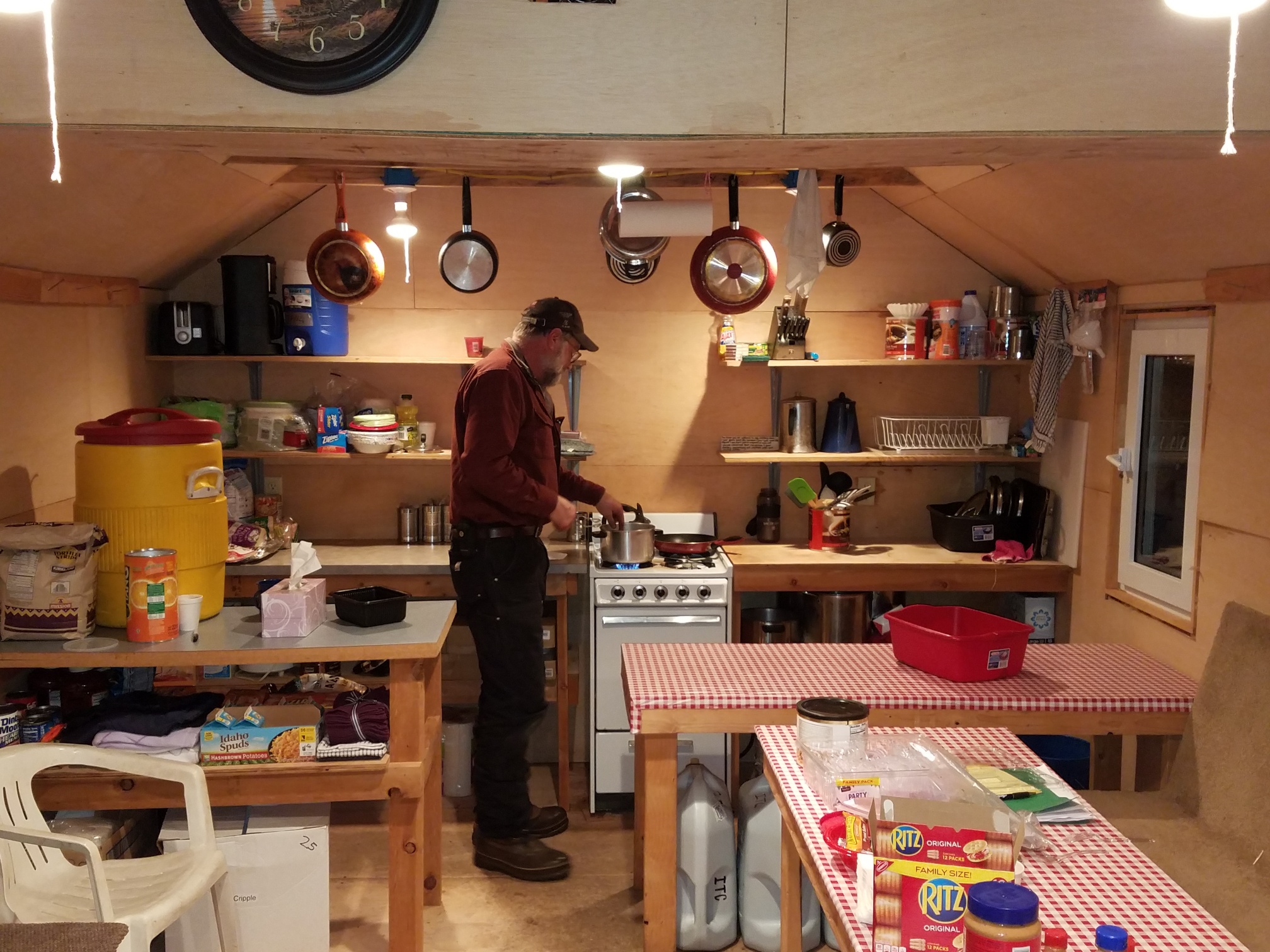
Cooks – As the race progresses a team of cooks grill their way through the day providing food for volunteers.
Staging and Chute – As teams are called to the Start line, they make their way through a chute keeping all canine athletes in line. A high level of experience with sled dogs plus extensive physical ability and a knowledge of the activity is required.
- Positions in this area require extensive sled dog experience
- Excellent physical condition to work in arctic areas
Trail Guard – Trail guards are placed at a street or road crossing to control vehicle and pedestrian traffic. These locations are often further away from the restart line. An important role during the race, Trail Guards ensure the safety of dog teams and spectators. This is a great opportunity to see the race up close and see all teams as they pass by. Trail Guards often need to walk through deep snow, lift and carry heavy objects, or add snow back to the trail at crossings.
- Positions are regularly available in this area
- Volunteers may be working alone in areas with long hours in cold and desolate areas
Security – Security volunteers play an integral role in ensuring the safety of all attendees, human and canine alike, and for securing the event areas. These positions require a skillful flair for dealing with the public and experience in diplomacy to keep the general public from interfering with race participants. You will staff public crossings and keep the trail open within the staging area.
Traffic Control/Parking – The community center in Willow is in a small area with limited parking. From 7:00 am to 5:00 pm, volunteers in this area will assist mushers, volunteers with disabilities, authorized volunteers, and dignitaries to their parking spaces and keep access clear for ingress and egress of vehicles.
Dog Handlers – Mushers may need assistance from volunteers to move their teams from their parking space to the Start line. You will meet the Lead Dog Handler for your assignment and keep returning for more assignments until all teams have reached the Start line. Be prepared to run at least four city blocks in snow. This job is not easy. It is not a job for everyone.
These volunteers require special training, and you will take one Dog Handler Training class to be held at Iditarod Headquarters in Wasilla on February 21st at 10:00 am or at the Lakefront Anchorage, 4800 Spenard Road Anchorage Friday, March 6th at 10:00 am or 12:00 pm.
Volunteers must be physically fit and in good health to work in arctic conditions to keep pace with an energetic and excited dog team. Be prepared to run in deep snow and on icy terrain. This job is not easy and is not a job for everyone.
Restart Tear Down – Once the Restart ends and the teams are on their way down trail, it’s time to pack up and store everything for another year. Volunteers work together to load equipment and materials back onto the truck and ensure the Community Center is as it was when we arrived.
- Positions in this area are always available
Finish Operations (Nome, AK)
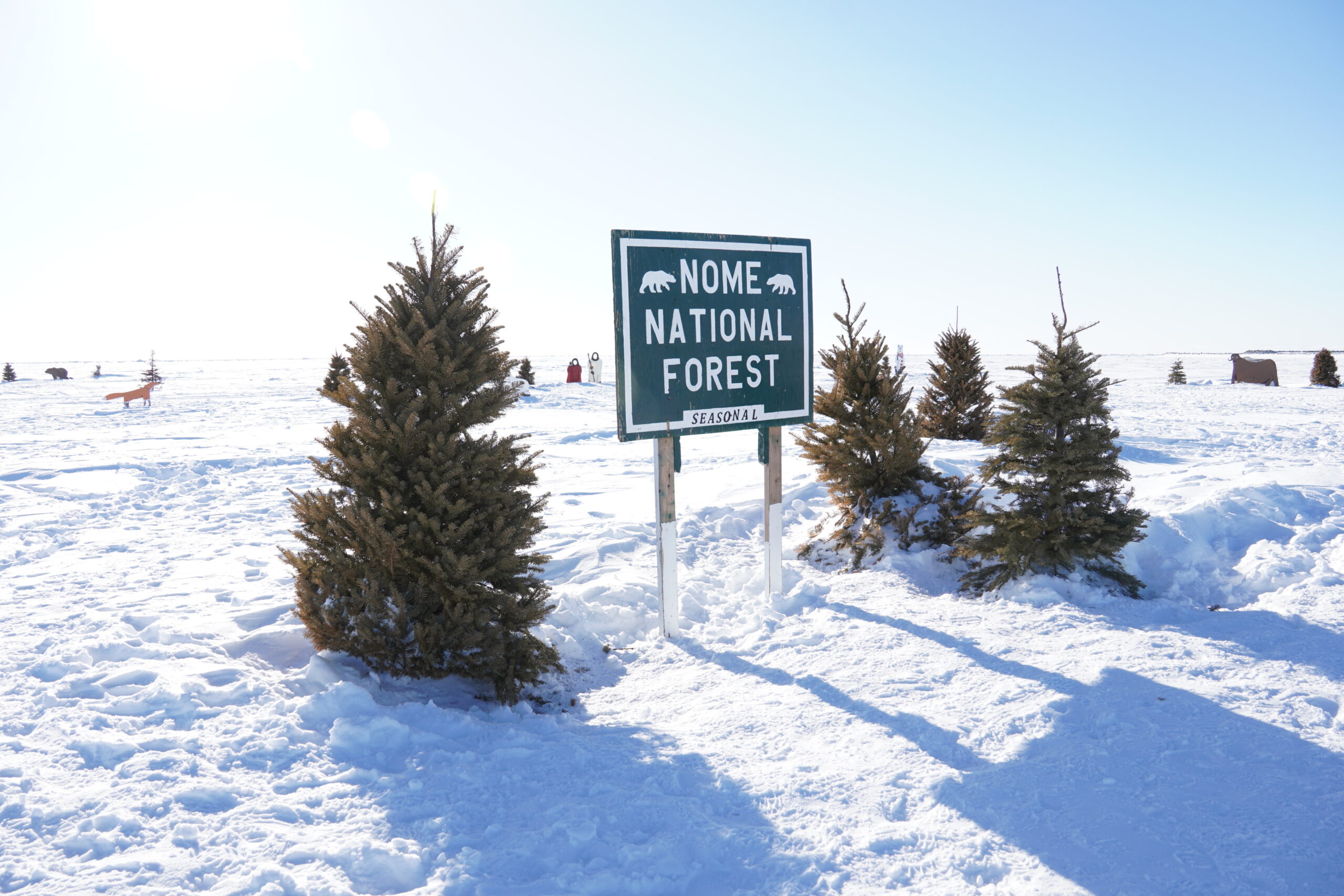
As teams of sled dogs make their way to the finish line in Nome, it’s all hands-on deck to set up for the finish. Nome is a special place but has limited services. The celebration for teams completing the Last Great Race begins with the first musher crossing under the iconic burled arch and culminates with the final “Red Lantern” finisher, and then on to the Finishers Banquet on Sunday, March 22. The Nome Finishers Banquet unfolds with tales from the trail and the awards ceremony.
If you would like to volunteer in Nome, please make your lodging arrangements well in advance and don’t wait until a coordinator contacts you. Iditarod does not arrange or provide lodging. You can contact the Nome Visitors Center as they may be able to help you find housing.
IAF Gate Agent in Nome – The IAF Gate Agent will serve as the main point of contact for check-ins and IAF customer service in Nome, monitor the return of volunteers post-assignment, and facilitate their return flights to Anchorage following the Finisher’s Banquet. The tenure for Nome Gate Agents starts towards the race’s conclusion and ends once all volunteers have left.
Finish Chute Set-up – Well before the teams arrive volunteers are needed the weekend before the finish to set up the chute and erect the burled arch. Temperatures can be cold and harsh. Volunteers will need appropriate apparel and equipment and have good physical stamina for arctic conditions.
24 Hour Office Help – Nome becomes a hub of activity day and night as the teams finish. As the community prepares for team arrivals, volunteers are needed at the information desk to take messages, answer phones, register volunteers, and more.
Nome Dog Lot – We need hearty dog loving humans to work 4-hour shifts 24/7. You will provide security, usher in the incoming teams to their assigned spaces, and be an extra eyes and ears for the vets and techs. No certification required but appropriate apparel is necessary and good physical stamina to withstand both arctic conditions and very energetic sled dogs
ITC Sales & Merchandise in Nome – Like every great event, volunteers and spectators alike want to take home a souvenir or two. Volunteers sell Iditarod merchandise during the race at The Wildbirch Hotel, located at 239 W 4th Avenue Anchorage Alaska 99501, during the Mushers Banquet held at the Dena’ina Civic and Convention Center, in the snow at the Start & Restart of the Race, and in Nome. Sales begin the weekend before the race until Banquet Day in Nome. While working at one of our many gift shops, you will help fans making purchases of awesome memorabilia, answer questions, restock inventory, refresh displays, and more. The ability to use cash registers and a credit card machine is helpful.
Chute Security – Provide security as assigned at the finish line chute for the first 5 to 10 teams.
Banquet Set-up – Early day preparation of the venue area for the banquet, to include setting up tables and chairs, erecting the stage, hanging banners, and transferring meal products to the prep areas.
Finisher Banquet Worker – Preparing buffet tables for service and replenishing as needed. Clean up after food service and tear down after event. There are a few volunteers needed for beverage service.
- A TAP Card is recommended
End of Race Tear Down – As the race for this season ends it’s time to pack it all up for the following year. Some of the activities necessary are to disassemble the chute and headquarters and pack up supplies for storage or shipping. We sure could use your help
Iditarod Trail Checkpoints
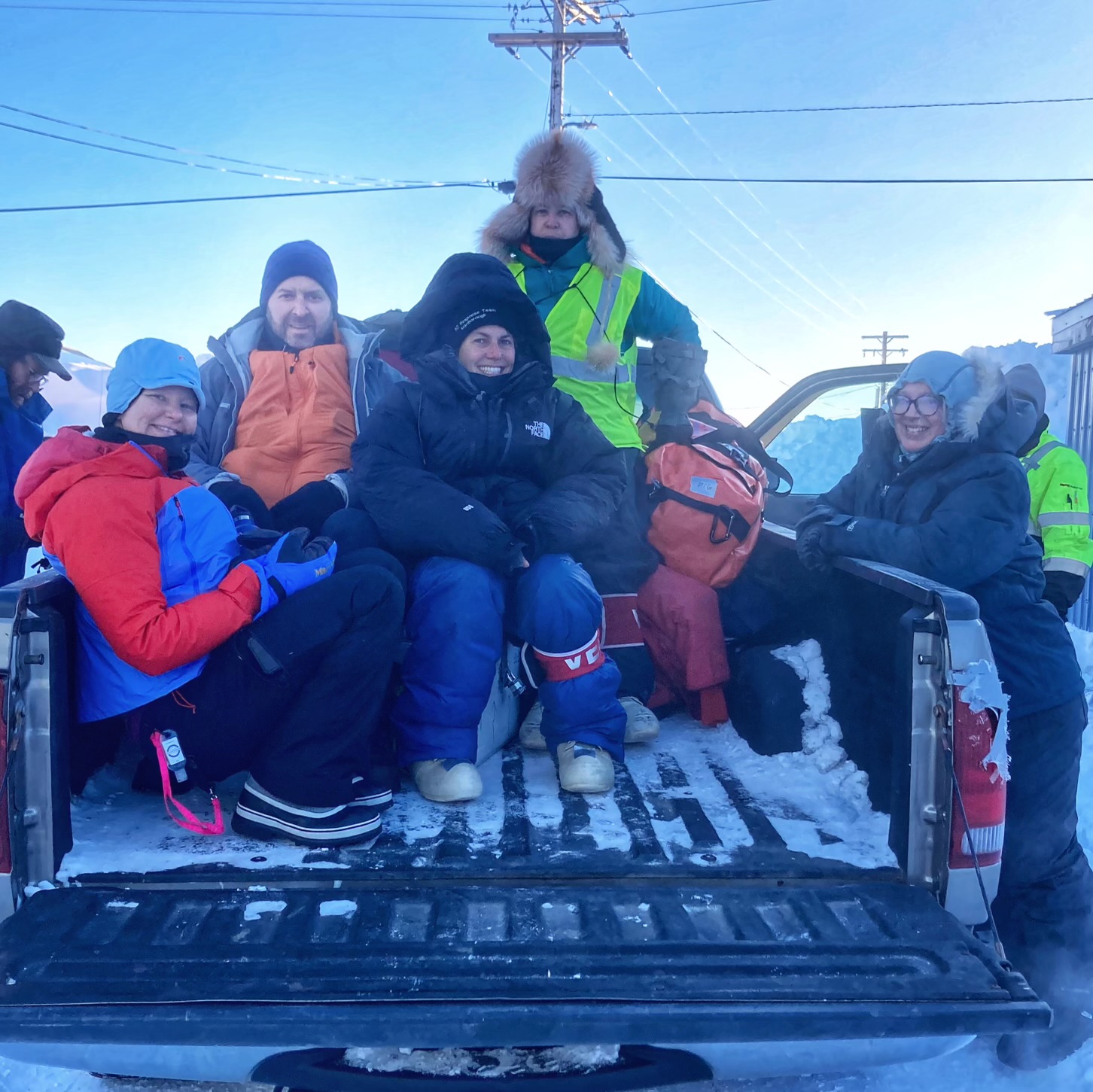
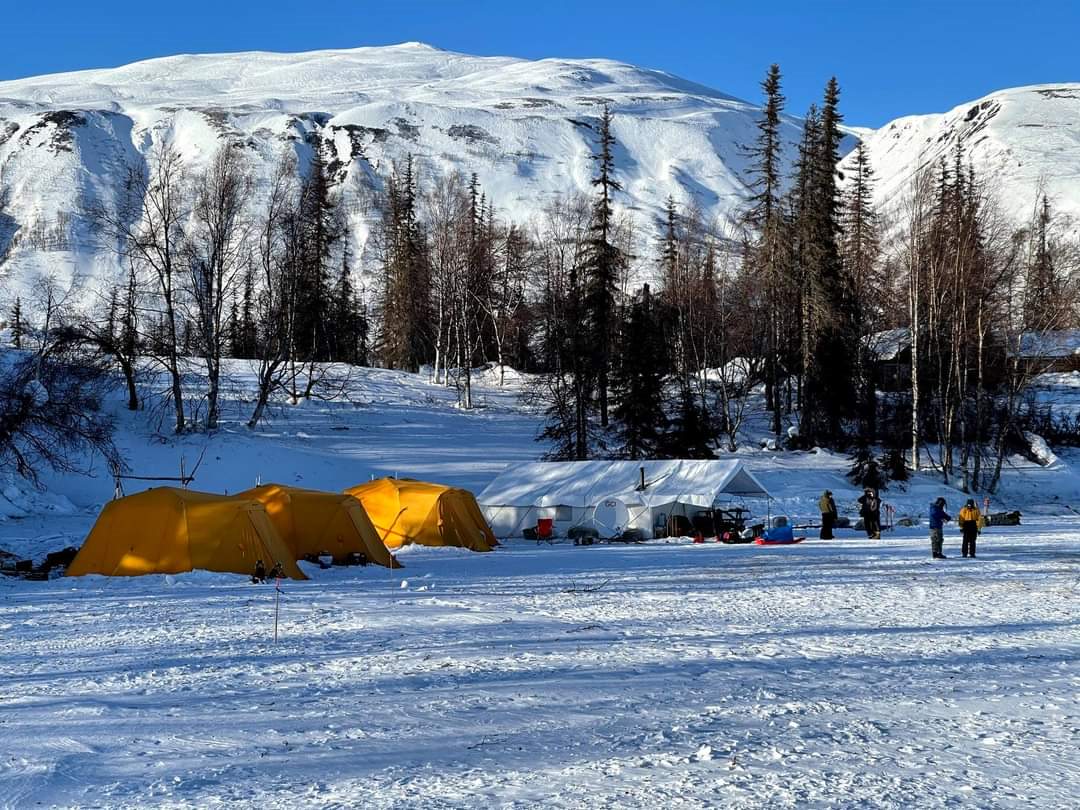
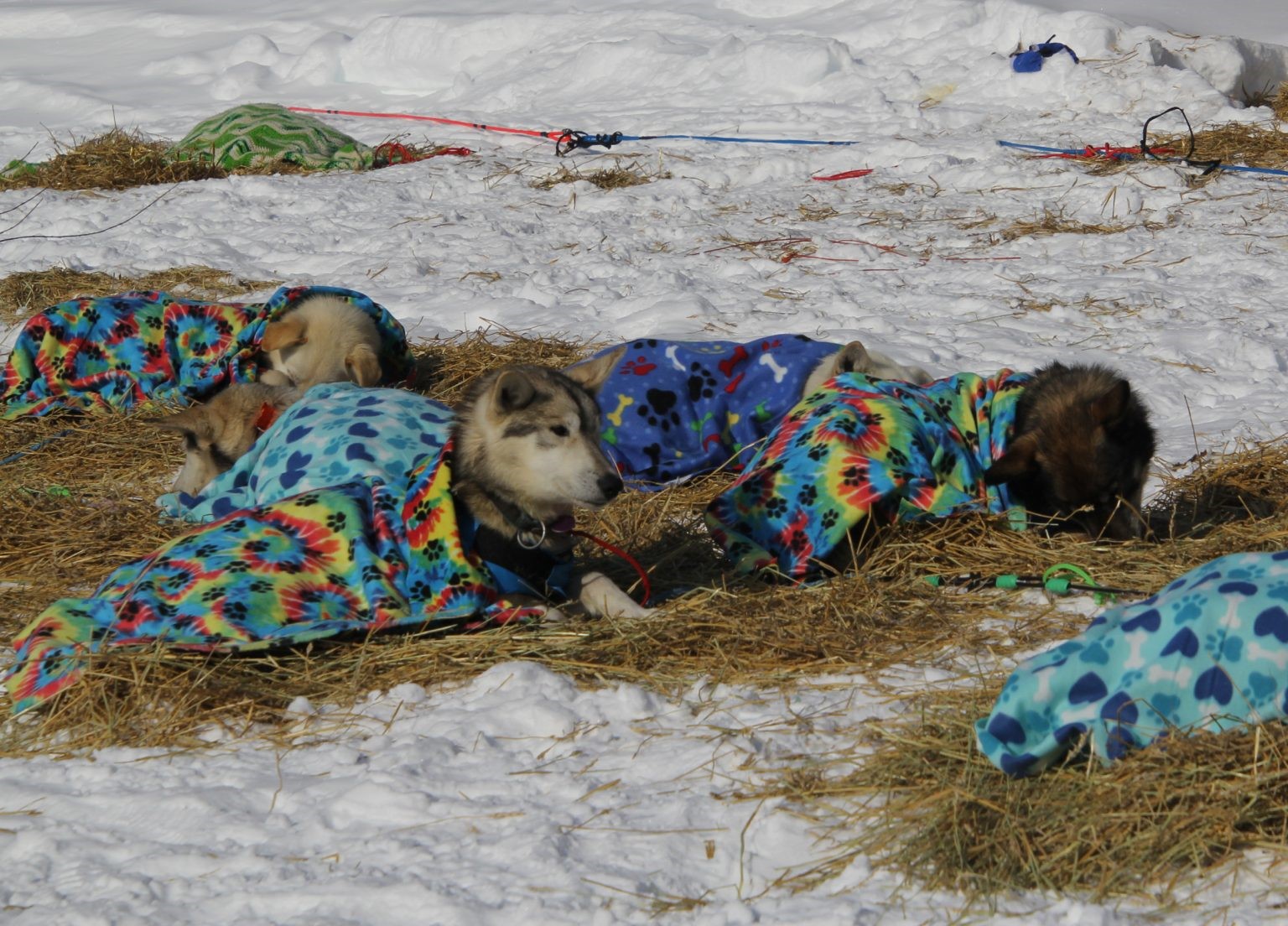
A select group of 60 volunteers staff the checkpoints from Yentna to Nome. Specifically, the jobs listed below are Comms, Crew, and Cooks. If you excel in challenging winter outdoor conditions, possess patience and adaptability, and can cope without running water, one of these positions might be right for you. Your checkpoint assignment may be between 3 and 14 days depending on the checkpoint.
Trail positions for volunteers are based primarily on skill sets and experience. Please take a minute and read the information on the registration form. Trail positions require a high demand for physical activity. If you would like to apply for a trail position, please check that box and we’ll talk to you about it but know that most trail positions are filled with returning volunteers. (If you are registering for ANC, you do not need to check Trail Position on your registration form.)
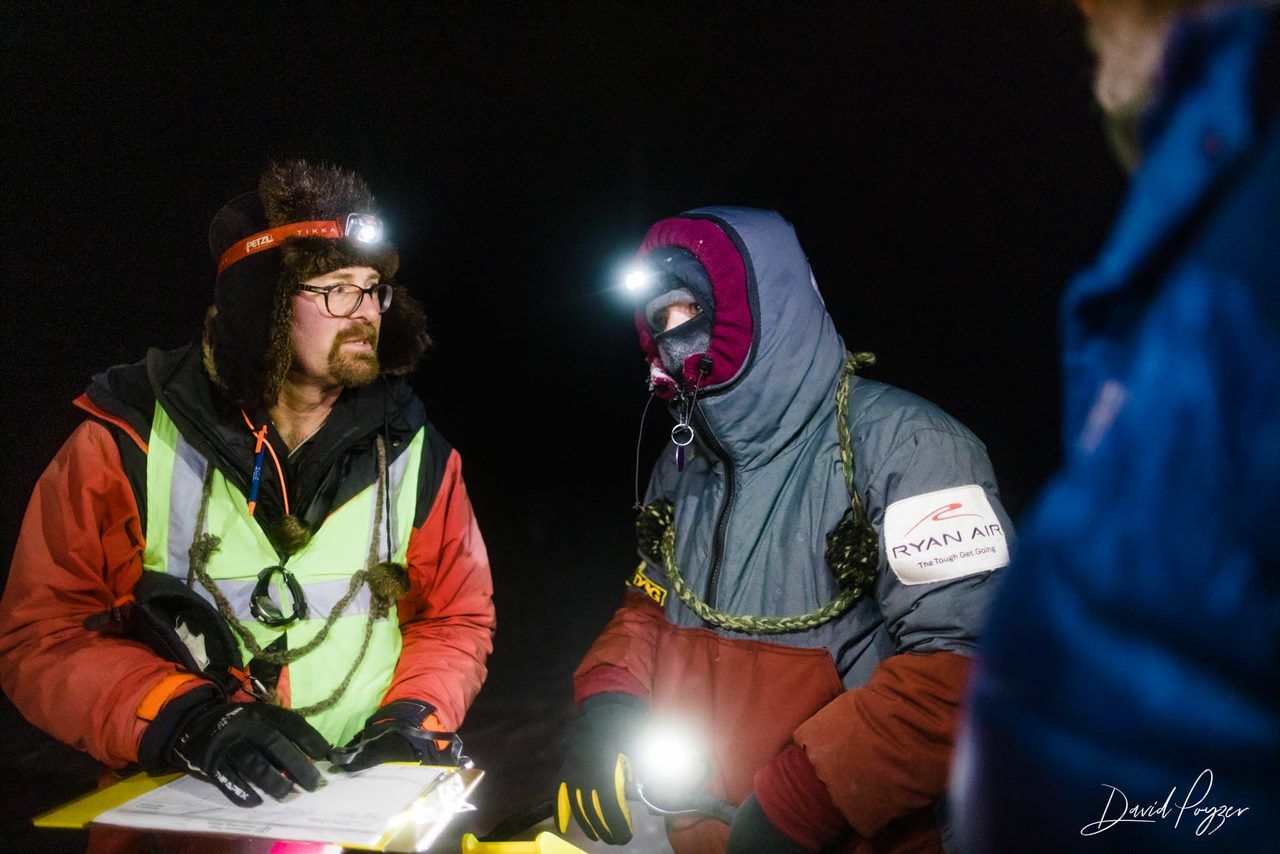
Checkpoint COMMS – As a volunteer in this position, you will be the first in the checkpoint and will liaison with the local team to set up the checkpoint and communications areas. You will install the internet services, check transmissions, and manage the logistics of the rest of your volunteer team to get to the checkpoint. Before the first musher arrives, you ensure all communications, food, supplies, and sleeping quarters are prepared and the team is rested. As mushers near your checkpoint, you will track teams to give estimated time of arrivals to the checkers. You will document and transmit team IN and OUT times and dog traffic to ANC. Once the last team has passed through your checkpoint you will tear down and clean up, making certain the entire location is left as good or better than when you arrived. Working with your IAF LOGS Control Hub, you will manage the logistics of all volunteers, musher return bags, and equipment and supplies leaving the checkpoint.
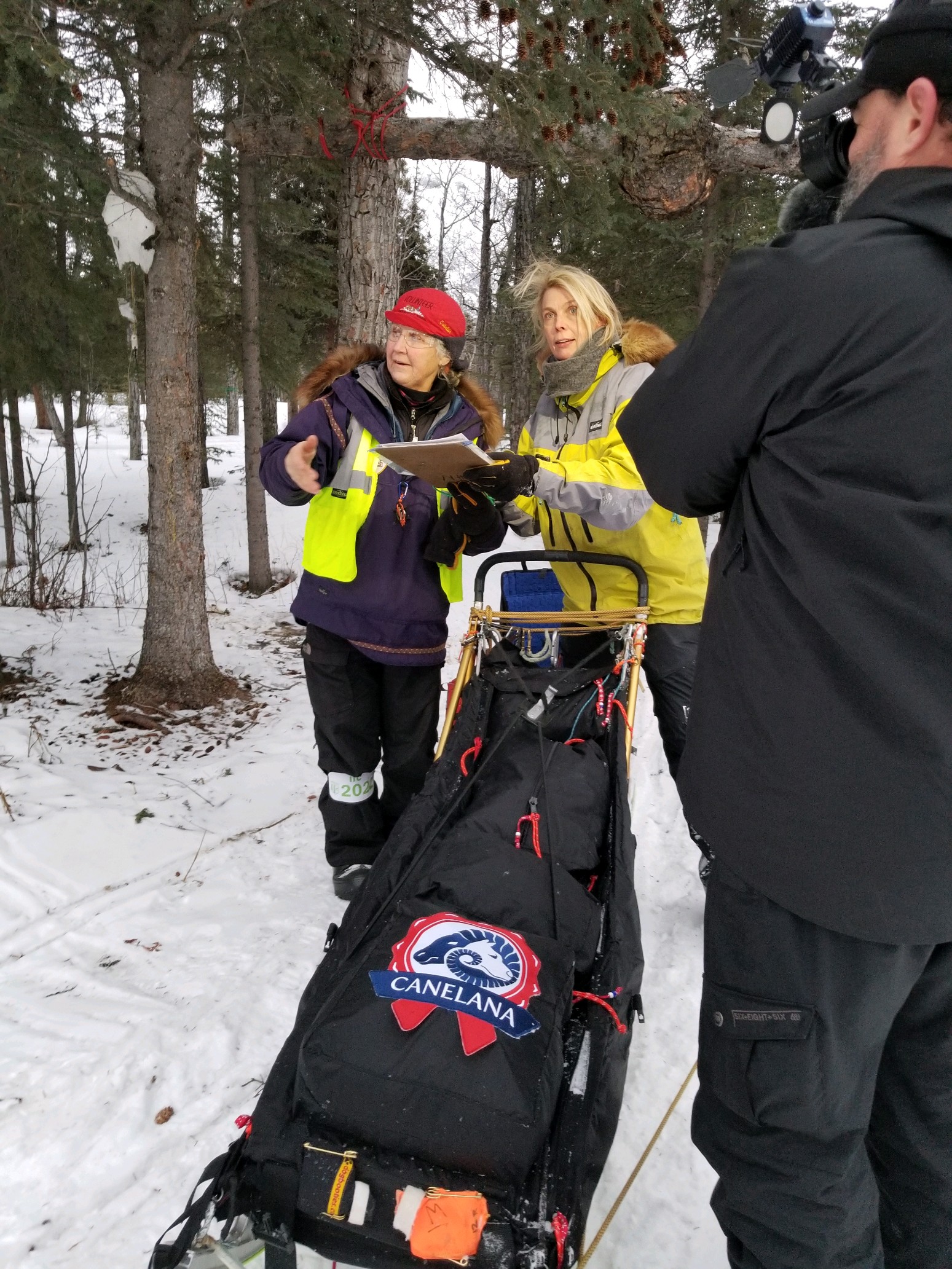
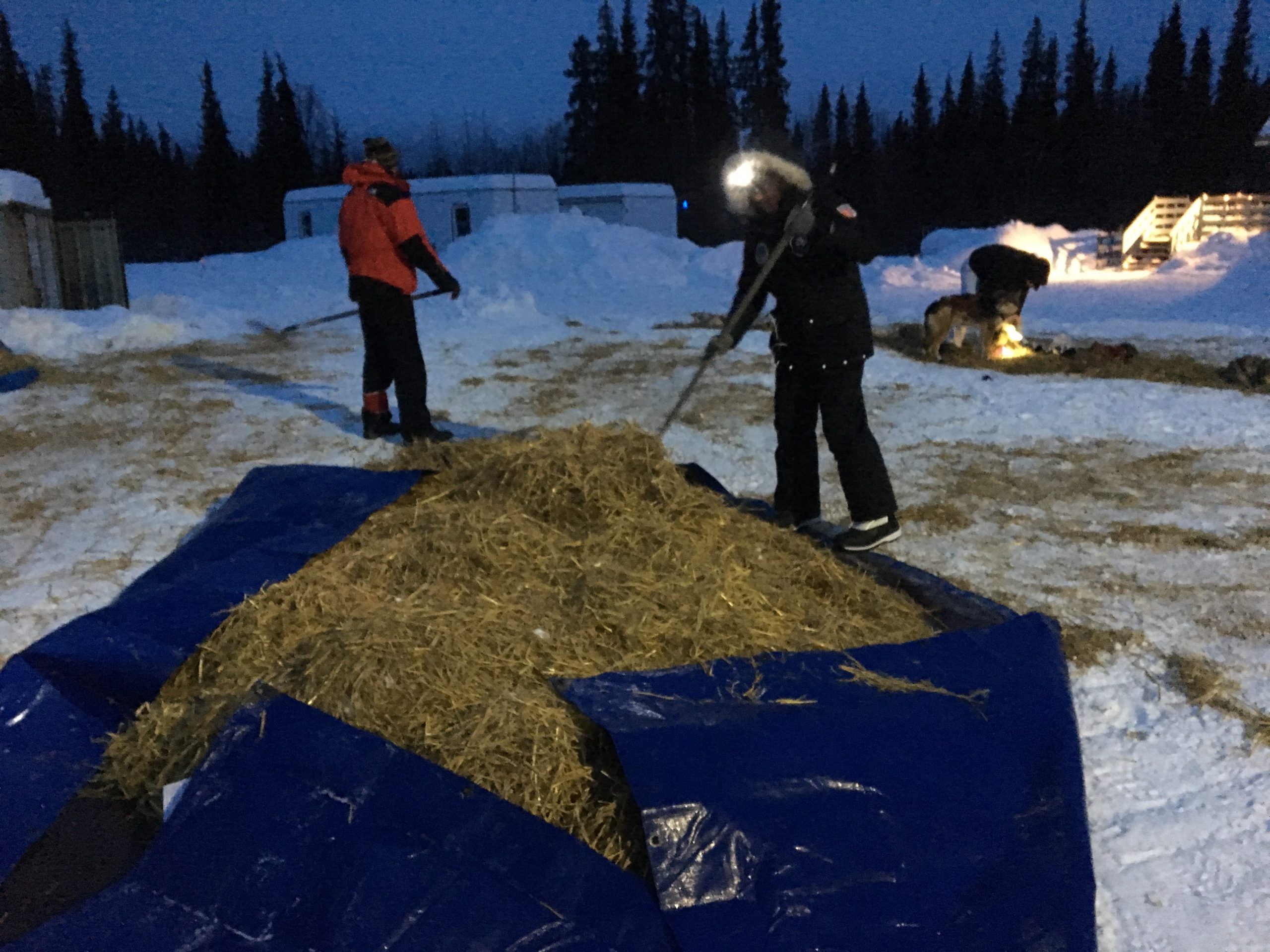
Checkpoint Trail Crew – As a volunteer in this position your focus is on the yard. You will set up the IN and OUT chutes, and inventory and move straw, HEET, and musher bags. You will prepare for incoming and outgoing teams, ensure water is available and determine the best parking process and locations. If you are stationed at a remote tent checkpoint you will chop wood, set up tents and fuel sources, and manage yard resources. During race time, you may be a checker recording the musher IN times, or documenting and providing Comms with team OUT times. As Trail Crew you will work long hours outside in all weather conditions and spend a good deal of time raking used straw after each team has left.
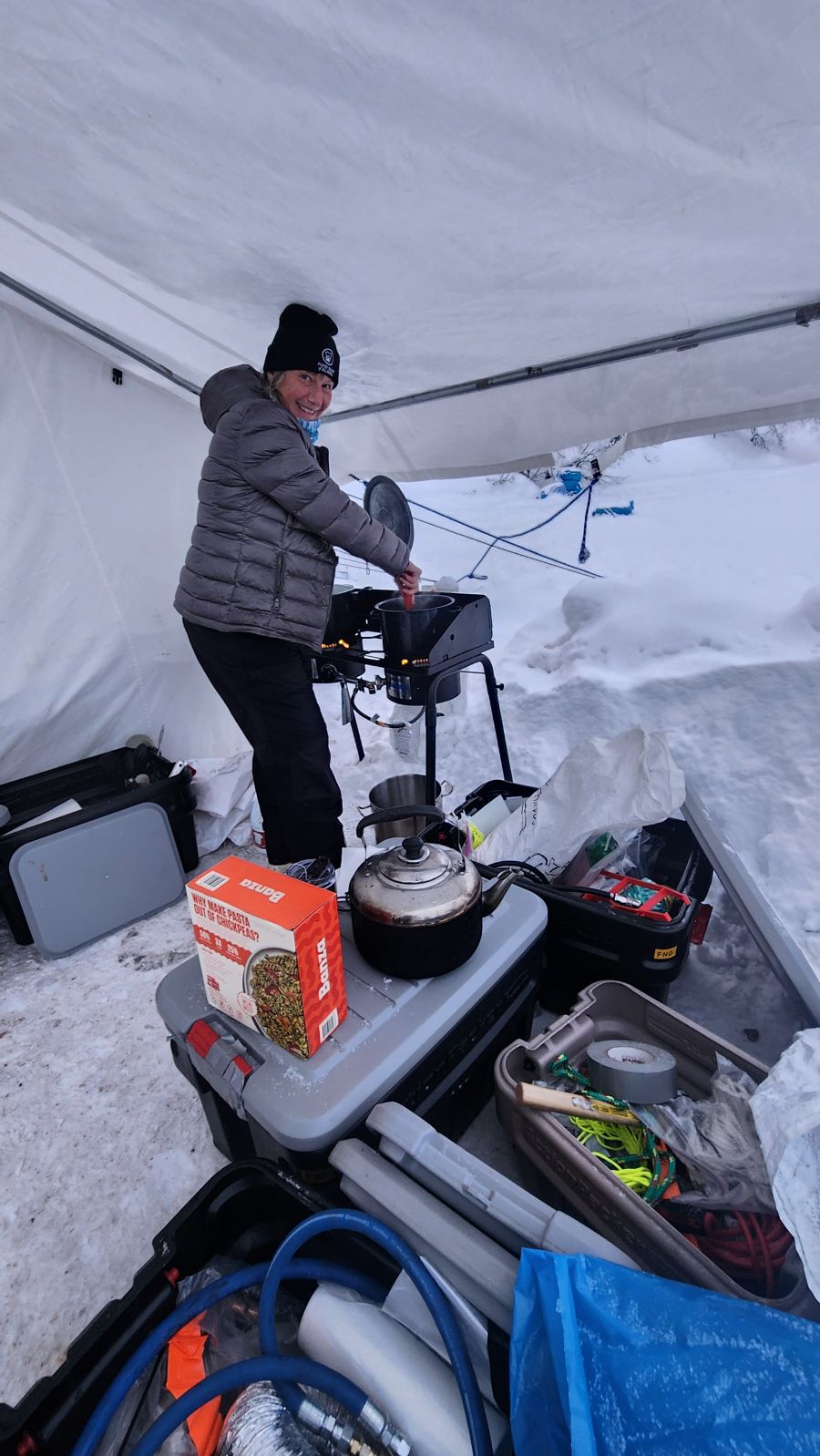
Cooks – Cooks are essential team members at the Hubs, managing food supplies and preparing meals for hundreds of volunteers – not only the checkpoint volunteers but also the volunteers who are waiting at the Hub before being transported to outlying checkpoints. Hub cooks should be well-versed in cooking large quantities of hearty food for very hungry hard-working volunteers, planning for the next day’s meals, and estimating quantities. Not all checkpoints have cooks as part of their teams, but if assigned to a checkpoint the duties are primarily the same. While Checkpoint cooks may be feeding 15 to 20 volunteers, Hub cooks need to be ready to provide breakfast, lunch, dinner, and bottomless coffee for up to 75 people at a time.
Iditarod Air Force (IAF) Support
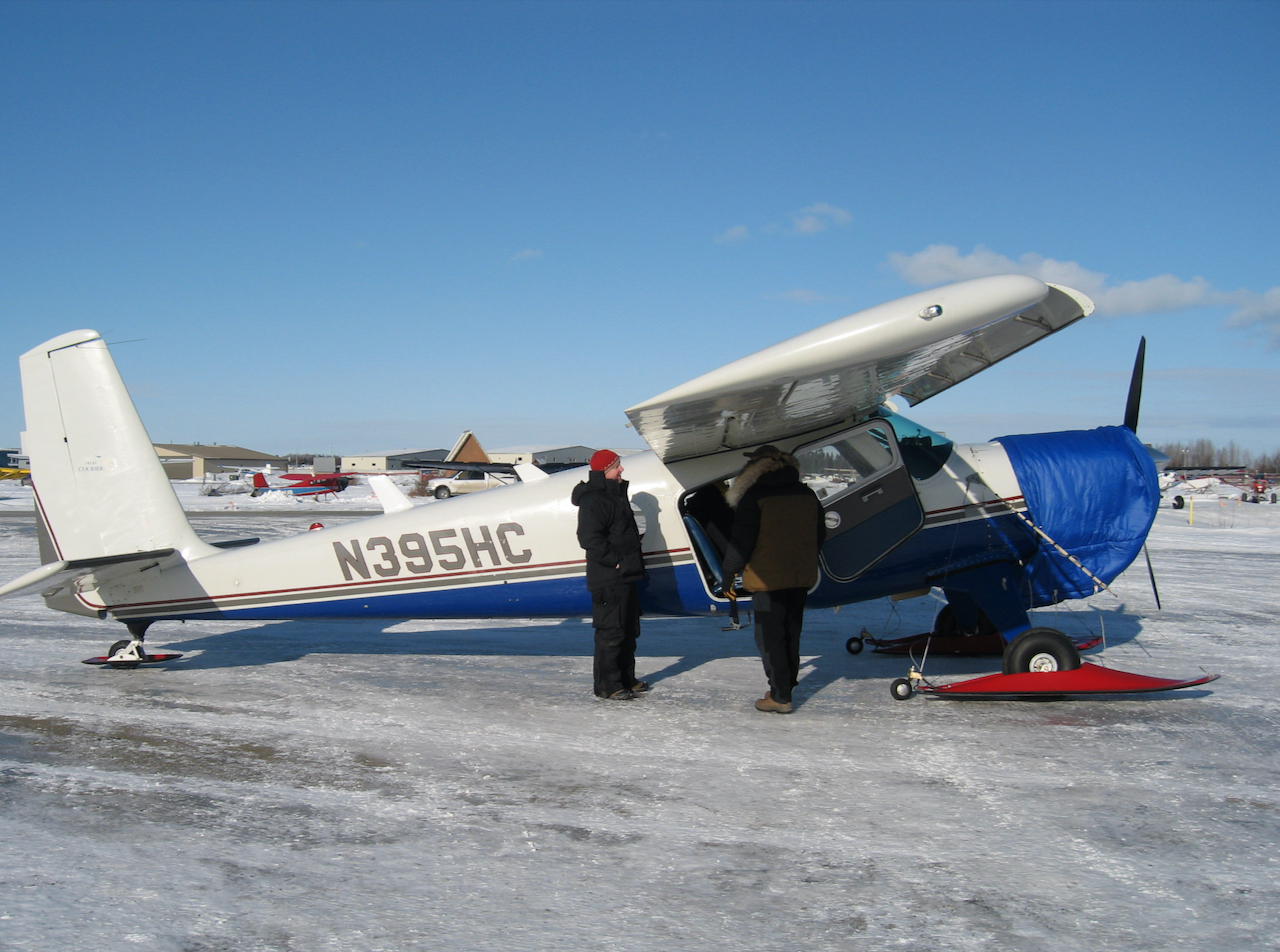
The IAF orchestrates commercial, charter, and IAF fleet movements from the Commercial and Logistics Hubs of Anchorage, McGrath, Unalakleet, and Nome, and move supplies, equipment, and people to and from the mandatory checkpoint along the trail before and during the race. Training is provided for all positions. Please note that the IAF is a fairly small organization and volunteer opportunities are limited.
Iditarod Air Force (IAF) Commercial Flights Coordination
As a FLIGHT OPS team member, you will oversee planning, booking, and managing the transit of people and supplies through commercial charters and seat fares to various locations along the trail and back. You will review checkpoint staffing, coordinate with team leaders to set schedules and priorities, generate daily manifests, and manage updates related to weather variables and operational demands. The core planning and execution team is located in ANC HQ and shifts cover hours from 0500 through 2300. The initial planning work begins mid-February.
If you also volunteer as a Gate Agent, you will serve as the front-facing representative for check-ins and customer service, greet volunteers as they prepare to depart for the trail, and oversee boarding, deplaning, and tracking passenger locations each evening. Gate Agents positions are available in Anchorage, McGrath, Unalakleet, and Nome. If you work at a checkpoint, you may also be able to work as a Gate Agent before or after your trail assignment.
IAF Hub Load Coordinator or Ground Crew Member
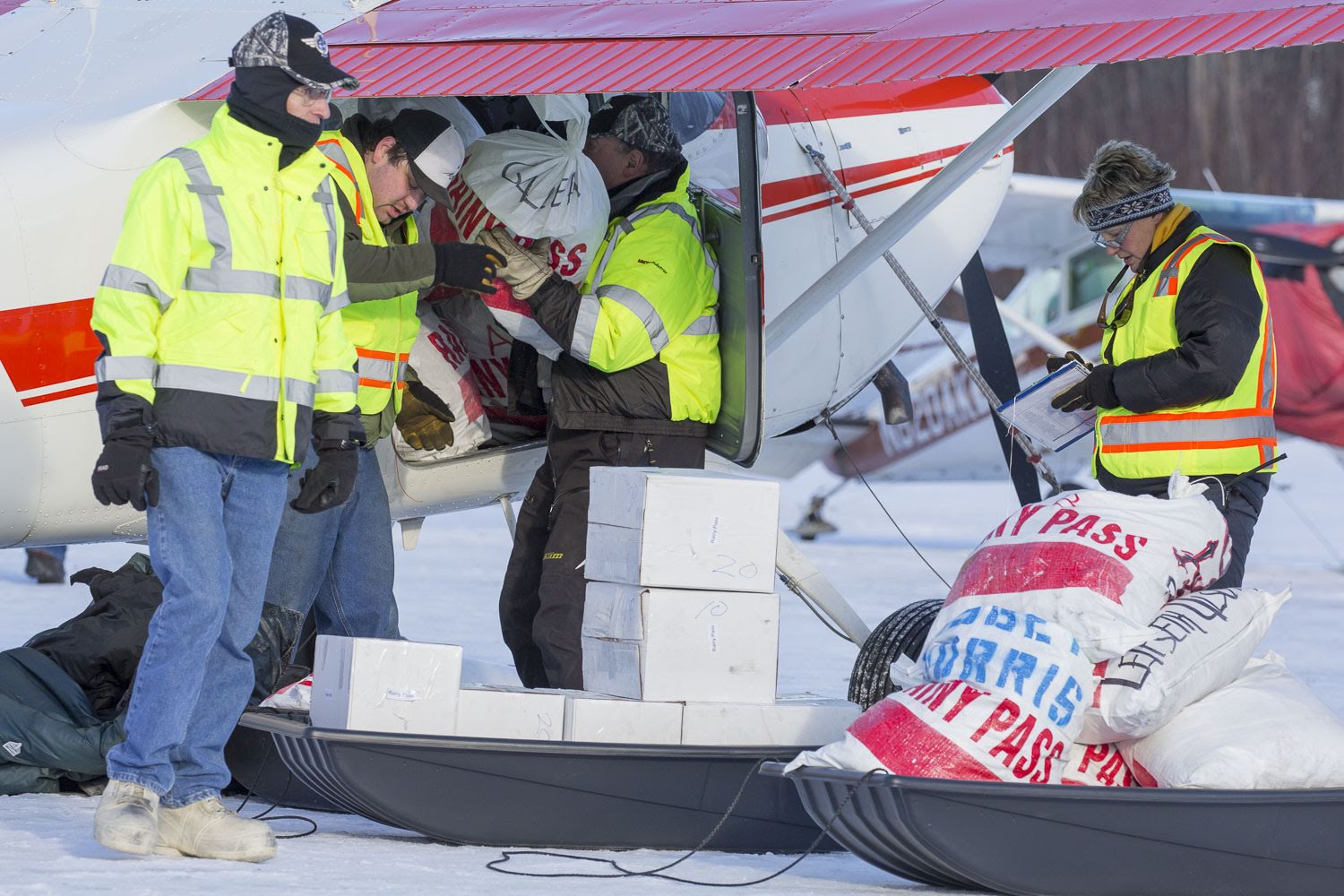
As a member of an IAF LOGS HUB you will support aircraft movements and airfield operations for a squadron of IAF pilots, the majority of whom fly Cessna 180s or 185s. IAF LOGS offices are located in Anchorage, McGrath, and Unalakleet. Each LOGS Hub supports a designated set of checkpoints along the trail for logistics, supplies management, and communications.
As a Load Coordinator, you will collaborate with Commercial Flights to oversee the hub-and-spoke system of volunteer movements along the trail, maintain daily communication with checkpoint leads, and flight follow each IAF aircraft from dawn until dusk. The work is primarily inside, but you may also assist the Ground Crew if you have time. Ground Crew should be prepared for heavy lifting and extended hours in cold conditions. Responsibilities include loading, unloading, and fueling aircraft, managing supplies and equipment inventories, and transporting passengers to and from airstrips.
Check out the below video for a glimpse into the incredible story of the Iditarod Air Force.
Dog Care & Medical Support
Dedicated to dog care, the Iditarod uses licensed veterinarians, veterinary technicians,
and Iditarod- certified dog handlers.
Dog care and medical support during the race includes evaluations and care of dogs actively racing and dogs that
are discontinuing from the race (termed “Return Dogs”).
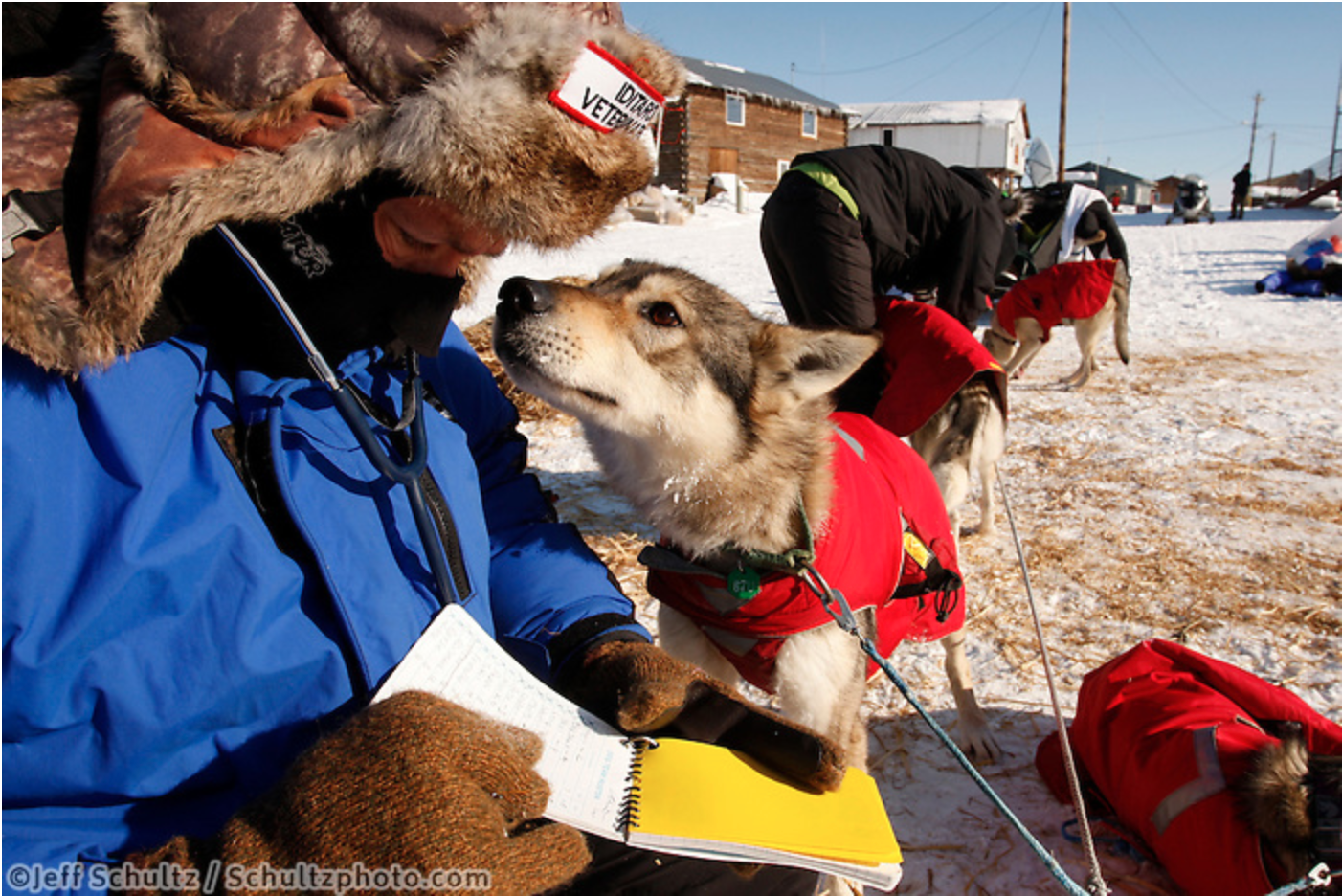
Veterinarians – Licensed Veterinarians are involved in pre-race dog examinations and are stationed at each race checkpoint to evaluate and care for dogs running the race as well as for those dogs that may be discontinuing from the race (“Return Dog”). Veterinarian positions are by invitation-only and the application window is from June to October before the following year’s race. Applications are available upon request during that time only. Please read Veterinarian Requirements and Information and contact the Veterinary Program Support Admin (karen.mcnaught@iditarod.com) with any questions.
Veterinary Technicians/Nurses – Veterinary Technicians are involved in pre-race veterinary testing for all team dogs as well as assisting veterinarians with return dogs at a few dedicated locations along the trail (see handler section below). While many veterinary technician positions are filled by returning volunteers, new volunteers with the requisite licenses or expertise are encouraged to apply and can be added to the team yearly. Please read Veterinary Technician Requirements and Information and the rest of this section below before submitting an application.
Return Dog Handlers/Office Crew – Return Dog handlers are used in a few dedicated locations along the trail to assist the medical team in caring for and transporting the return dogs from the trail back to Anchorage headquarters. Return Dog locations include Headquarters in Anchorage and trail hubs in McGrath, Unalakleet, and Nome. Volunteers set up and take down the holding/housing areas (called dog lots) in each location and work with the Veterinary Team to care for the dogs. Positions for office crew support the return dog operations in Anchorage and involve data entry. While many return dog handler/office crew positions are filled by returning volunteers, new volunteers with the requisite licenses or expertise who are interested in these positions are encouraged to apply as we are always adding new members to the team yearly.
Requirements for ALL positions within return dog (including the Veterinary Technicians) include:
- Be able to work 8 – 12 hr shifts in arctic conditions (trail hubs function 24-hrs a day)
- Comfortable in various types of accommodations: Trail hub accommodations/facilities are very rustic and should be viewed as camping. Anchorage accommodations/facilities are hotels/Airbnb/etc.
- Comfortable flying in small planes (trail hubs only)
- Be able to lift 50 pounds and be in sufficient health and have proper gear to work in arctic conditions
- Be able to volunteer for a minimum of 7 consecutive days
- Previous experience with sled dogs or working dogs is highly desirable
- Have obtained an Iditarod dog-handling course certification (handler courses given in Anchorage before race start)
- Comfortable using computers and tablets (office crew in Anchorage)
Post Race Operations
Once the teams are safely off the trail and the race has wrapped up, there’s still much work to be done! From Start to Finish, we couldn’t do it without the help of our incredible volunteers.
Unload Trailers at ITC Headquarters – Dates TBD, 2nd week in April – unload musher sleds and other equipment coming back from the trail.
Volunteer Picnic – The volunteer picnic is at ITC Headquarters in Wasilla on the last Saturday of June. The day before the picnic Volunteers set up tents, tables, and chairs, and put out the recycle and garbage cans. On the day of the picnic, they help with raffle drawings and musher sign ups. If you have time to help and want to meet some great folks, please join us.
MORE INFORMATION
BEFORE YOU APPLY, READ THESE FAQ’S & HANDY HINTS
- You must be 18 yrs of age for most all positions
- Not all coordinators will have positions available to which you may apply
- Consider volunteering for positions at the Ceremonial Start in Anchorage or the Official Restart in Willow, as these areas have the greatest need and the greatest number of positions available.
- If you are planning to be at the race this year (whether you volunteer or not), please book your trip sooner rather than later. There is a volunteer rate at The Wildbirch Hotel, located at 239 W 4th Avenue, Anchorage, Alaska 99501, The ITC does not pay for volunteer transportation or lodging in Anchorage.
- If you have general questions, including those regarding volunteer registration, email ITCregistration@iditarod.com
LEGAL STUFF – In case of an incident resulting in injury, immediately report the event to your Coordinator who will complete an incident report. The incident report must be completed within 24 hours of the incident for it to be submitted to our insurance company.
SOCIAL MEDIA – You are not permitted to post photographs or video while on volunteer shifts. The Social Media form is part of the ITC Release Policy. You will need to complete this form before you are authorized to work or travel for the Iditarod. Due to copyrights, media policy and to protect the integrity of our Insider network, it is strictly prohibited for volunteers to go live on social media at the Ceremonial Start, Restart, or Finish of the race, or during any part of the live race (including checkpoints), regardless whether you are volunteering or spectating at the time.
Once you complete and submit the application, you will receive a “successful submission” autoreply. If you need to update information in your application, please do not apply again. Instead, please contact us with the current information at ITCregistration@iditarod.com.
**** Thoroughly review your application to ensure all information is correct, and that you have acknowledged the GENERAL RELEASE AND ITC POLICY , otherwise, your application cannot not be submitted for consideration.****
If you do not receive an email from a coordinator saying that you are an approved volunteer in an area you applied to, do not assume you are approved to volunteer. Please follow the “WHAT COMES NEXT” for guidelines.
WHAT COMES NEXT
After January 1, coordinators will review applications for their specific area and will contact volunteers for their team.
You may be sent an email when:
- Your application is received and successfully submitted
- A coordinator validates your application status
- Your Identification E-Badge and information letter has been sent
A coordinator will contact you with the details you need to know for the position to which you have been assigned.
You may receive more than one coordinator response if you apply to more than one position.
If you have registered to volunteer and you have been notified positions are unavailable in your area of interest, we encourage you to contact one of the coordinators below as these areas consistently have multiple positions available for you to be a part of the Last Great Race: